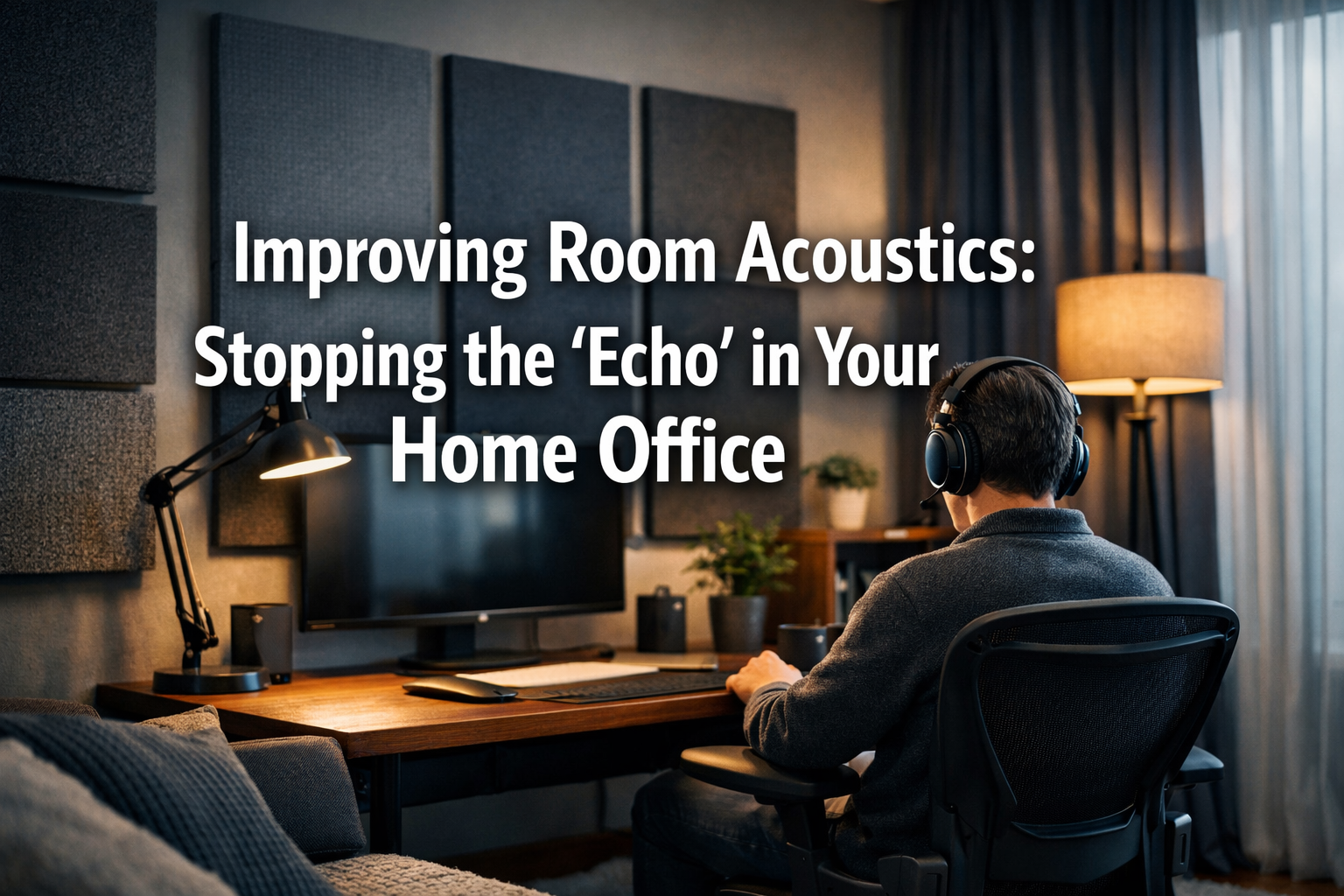

Improving Room Acoustics: Stopping the "Echo" in Your Home Office
Do you ever feel like you're speaking into a cavern during important video calls, or that every slight sound in your home office reverberates endlessly? This common annoyance, often described as an "echo," is a tell-tale sign of poor room acoustics. In today's hybrid work environment, where professional communication often hinges on clear audio, Improving Room Acoustics: Stopping the "Echo" in Your Home Office is no longer a luxury—it's a necessity. Bare walls, hard floors, and minimal furnishings create a sound reflective environment, causing sound waves to bounce around unchecked, leading to muddied audio, poor speech clarity, and ultimately, a less authoritative presence in meetings. Addressing this issue can significantly enhance your productivity, reduce listener fatigue for your colleagues, and project a more polished, professional image.
Key Takeaways
- Understanding Echo: An echo results from sound waves reflecting off hard, bare surfaces, creating a prolonged reverberation that degrades audio quality.
- Cost-Effective Solutions: Simple additions like rugs, curtains, and bookshelves can dramatically improve acoustics without significant investment.
- DIY Acoustic Panels: Building your own acoustic panels offers a customizable and budget-friendly way to absorb excess sound.
- Software Enhancement: Tools like Krisp.ai provide AI-powered noise cancellation, an excellent supplement to physical acoustic treatments.
- Professional Presence: Better audio clarity directly translates to enhanced professionalism and authority in virtual meetings.
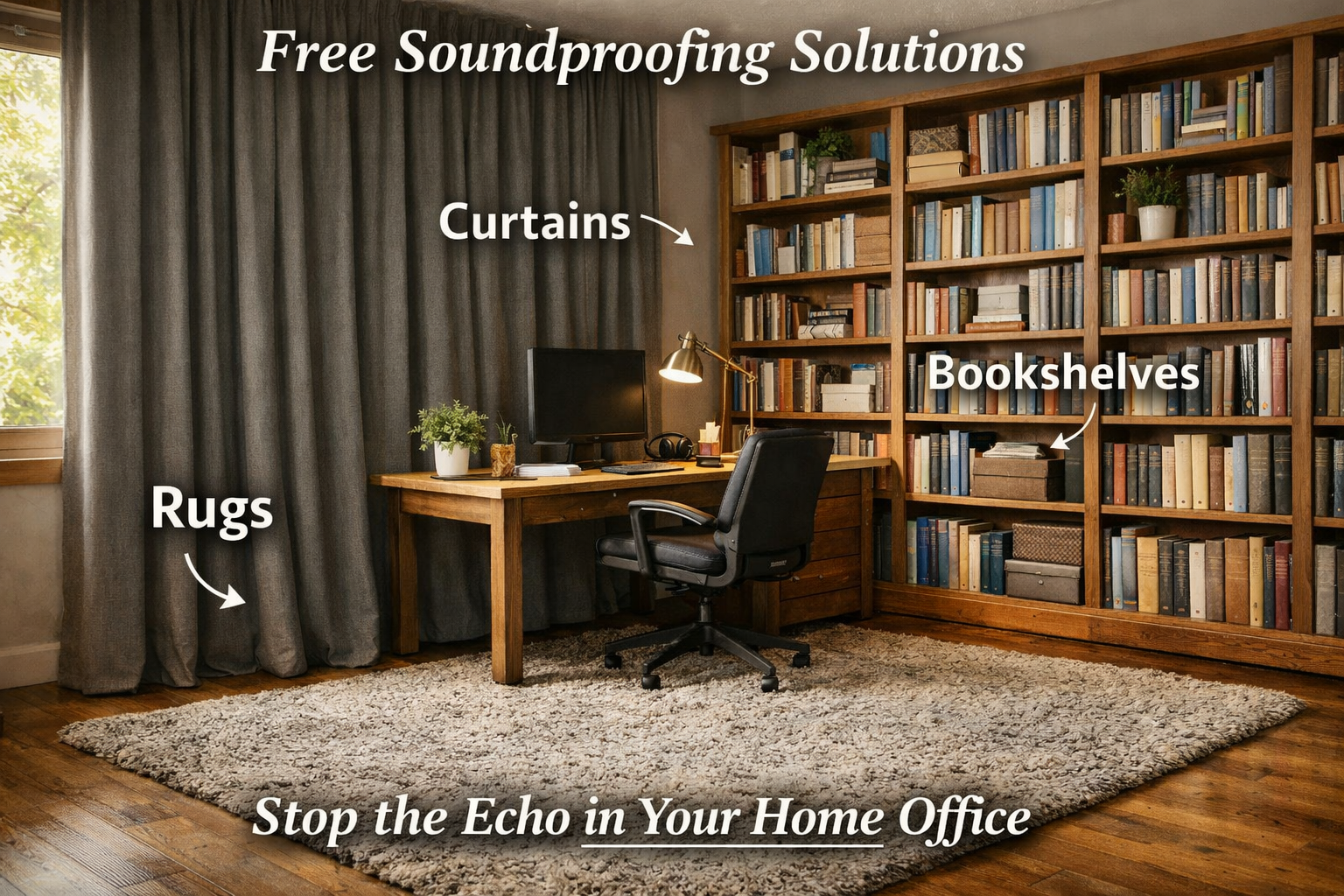
Rugs, Curtains, and Bookshelves: Free Soundproofing
Achieving better room acoustics doesn't always require a significant financial outlay or specialized equipment. Often, the most effective initial steps for improving room acoustics: stopping the "echo" in your home office can be found right within your existing household items or through minimal purchases. These common furnishings act as natural sound absorbers, breaking up sound waves and preventing them from bouncing endlessly around your space.
The Power of Soft Furnishings
Hard surfaces like bare walls, hardwood floors, and glass windows are the primary culprits behind echoes. They reflect sound waves with high efficiency, leading to reverberation. Introducing soft, porous materials into your home office helps to absorb these sound waves, converting acoustic energy into heat and reducing bounce.
Rugs and Carpets: Laying the Foundation for Silence
One of the quickest and most impactful ways to combat echo is to introduce a large area rug or carpet. The thicker and denser the rug, the more effective it will be at absorbing sound.
- Material Matters: Wool, shag, or high-pile rugs are excellent choices due to their dense fibers.
- Coverage is Key: Aim to cover as much of your floor as possible, especially in the area where you conduct most of your work and calls. A rug placed under your desk and extending beyond your chair can make a noticeable difference.
- Layering: For exceptionally echoey rooms, consider layering rugs for enhanced absorption.
Curtains and Drapes: Softening the Edges
Windows, being large, flat, and hard surfaces, are significant contributors to sound reflection. Heavy curtains or drapes can drastically improve the acoustic properties of your room.
- Thick and Heavy: Opt for materials like velvet, blackout fabric, or thermal curtains. These materials are denser and provide better sound absorption than thin, sheer options.
- Full Coverage: Ensure the curtains cover the entire window frame and extend from floor to ceiling if possible.
- Pleating: Curtains with pleats or folds offer more surface area for sound absorption compared to flat panels.
Bookshelves and Furniture: Functional Absorption
Beyond their primary function, bookshelves and other soft furnishings can double as acoustic treatments.
- Filled Bookshelves: A bookshelf packed with books is an incredibly effective sound diffuser and absorber. The irregular surfaces and varying densities of books break up sound waves, preventing them from reflecting uniformly. Place a large, well-stocked bookshelf on a prominent wall in your office.
- Upholstered Furniture: If space permits, an upholstered armchair or a small sofa can add significant sound absorption. The fabric and cushioning help to trap sound.
- Wall Art and Tapestries: Large canvases, fabric wall hangings, or tapestries can also contribute to reducing echo. While not as effective as dedicated acoustic panels, they add a decorative element while subtly improving sound quality. Consider exploring options for relocating to the UK with your family where interior design often blends aesthetics with practical comfort, including acoustic considerations.
DIY Acoustic Panels: Are They Worth the Effort?
When ready-made furnishings aren't quite enough, or if you're looking for a more targeted and aesthetic solution, DIY acoustic panels present an excellent option for improving room acoustics: stopping the "echo" in your home office. They are significantly more effective than simple soft furnishings for absorbing specific frequencies and can be customized to fit your room's decor. But are they worth the effort? Absolutely, for those willing to invest a little time and basic carpentry skills.
The Science Behind Acoustic Panels
Acoustic panels work by trapping sound waves within their porous material, converting the sound energy into negligible heat. This process reduces reverberation, leading to clearer, crisper audio. Unlike diffusers, which scatter sound waves, absorbers minimize them.
Why DIY?
- Cost-Effectiveness: Professionally manufactured acoustic panels can be quite expensive. Building your own can save you a significant amount of money, especially if you need several panels.
- Customization: You have complete control over the size, shape, fabric color, and even the type of acoustic material used, allowing for seamless integration into your home office aesthetic.
- Effectiveness: When constructed correctly, DIY panels can be just as effective as commercial alternatives.
Materials You'll Need
Creating your own acoustic panels is a straightforward process requiring a few key materials:
- Acoustic Insulation: This is the core of your panel.
- Mineral Wool (Rockwool/Owens Corning 703): Highly effective, non-combustible, and excellent for absorbing a wide range of frequencies. However, it can be irritating to skin and lungs, so wear protective gear.
- Rigid Fiberglass Board: Similar to mineral wool in effectiveness, often easier to work with.
- Denim Insulation (Recycled Cotton): A more environmentally friendly and less irritating option, though slightly less effective at lower frequencies than mineral wool or fiberglass.
- Wood for Frames:
- 1×4 or 1×2 lumber for creating the panel's frame.
- Fabric:
- Acoustically transparent fabric (e.g., burlap, speaker cloth, or open-weave upholstery fabric). Ensure it's breathable and doesn't impede sound absorption.
- Tools and Hardware:
- Staple gun, measuring tape, saw, screws, drill, utility knife, mounting hardware (e.g., Z-clips, French cleats).
Step-by-Step Construction
- Build the Frame: Cut your lumber to create a rectangular or square frame. Secure the corners with screws and wood glue.
- Cut the Insulation: Carefully cut the acoustic insulation material to fit snugly within your frame. Remember to wear gloves, a mask, and eye protection, especially with mineral wool or fiberglass.
- Insert Insulation: Place the insulation inside the wooden frame. It should be a tight fit to prevent sagging.
- Wrap with Fabric: Lay your chosen fabric face down. Place the framed insulation panel on top, centering it. Pull the fabric taut around the edges and staple it to the back of the wooden frame. Ensure the fabric is smooth and wrinkle-free on the front.
- Mounting: Attach appropriate mounting hardware to the back of your panel and then secure it to the walls of your home office. Consider placing panels at first reflection points—these are the spots where sound from your mouth (or speakers) first bounces off a wall before reaching your ears.
Is the Effort Worth It?
For many, the effort is undeniably worth it. The improvement in audio clarity, especially for those who spend hours in virtual meetings, can be transformative. It’s also a satisfying DIY project that allows for personal expression in your workspace. Just as many individuals find satisfaction in pursuing new opportunities like 50000 fully funded masters scholarships in Canada 2026 intake, the dedication to improving one's professional environment through DIY solutions offers a similar sense of accomplishment and tangible benefits.
Software Solutions for Noise Cancellation (Krisp.ai Review)
While physical acoustic treatments are fundamental for improving room acoustics: stopping the "echo" in your home office, they aren't always a complete solution, especially for external noises or the nuances of speech clarity. This is where software-based noise cancellation comes into play, offering a powerful digital layer of audio enhancement. These tools use artificial intelligence (AI) to filter out unwanted background noise, ensuring your voice comes through crystal clear, regardless of your physical environment.
The Role of AI in Audio Clarity
AI-powered noise cancellation works by analyzing audio input in real-time, distinguishing between human speech and various types of background noise (e.g., barking dogs, keyboard clicks, traffic, construction, echoes). Once identified, the noise is suppressed, leaving only the clear voice of the speaker. This technology can be particularly invaluable for remote workers, content creators, and anyone reliant on pristine audio for communication.
Krisp.ai: A Leading Solution
One of the most prominent and highly regarded software solutions in this space is Krisp.ai. It operates as a virtual microphone and speaker, integrating seamlessly with popular communication apps like Zoom, Google Meet, Microsoft Teams, Slack, and many others.
How Krisp.ai Works:
Krisp.ai uses a deep neural network trained on thousands of hours of speech and noise to accurately identify and remove unwanted sounds.
- Noise Removal (Microphone): When enabled for your microphone, Krisp.ai filters out all background noise coming from your end, so participants only hear your voice.
- Noise Removal (Speaker): When enabled for your speaker, it filters out background noise from other participants, ensuring you only hear their clear voices, even if they are in noisy environments.
Key Features and Benefits:
- Two-Way Noise Cancellation: Cleans both your outgoing audio and incoming audio from others.
- Echo Cancellation: Specifically designed to reduce room echo, making it highly relevant for improving room acoustics: stopping the "echo" in your home office. This complements physical treatments by tackling lingering reverberation electronically.
- Voice Quality Enhancement: Beyond just noise removal, Krisp.ai can subtly enhance voice clarity.
- Privacy-Focused: All audio processing happens locally on your device, ensuring privacy and security.
- Easy Integration: Simple to set up and use with virtually any communication application that uses a microphone and speaker.
- Cross-Platform Compatibility: Available on Windows, macOS, iOS, and Android.
Is Krisp.ai Worth It?
For professionals who depend heavily on clear communication, Krisp.ai is an invaluable tool. While it comes with a subscription fee (though a free tier with limited minutes is often available), the enhancement to call quality and reduction in listener fatigue can easily justify the cost. It acts as an essential digital shield against acoustic imperfections, allowing your carefully chosen words to be heard without distraction. Think of it as an insurance policy for your professional presence in the digital realm.
It's important to remember that software solutions like Krisp.ai are best used in conjunction with physical acoustic treatments. While Krisp.ai can dynamically remove the sound of an echo, a physically echoey room can still be fatiguing for you, the speaker, and might require you to speak louder. Combining the two approaches offers the most comprehensive strategy for improving room acoustics: stopping the "echo" in your home office. This comprehensive approach aligns with the mindset of continuous improvement, much like those seeking opportunities for 60000 STEM scholarships in the USA 2026 deadlines requirements where multi-faceted strategies lead to greater success.
Conclusion: Better Audio Equals Better Authority in Meetings
In the increasingly digitized professional landscape of 2026, where virtual meetings are commonplace, the quality of your audio directly impacts your perceived authority, professionalism, and overall effectiveness. A clear, echo-free voice signals competence and attention to detail, fostering trust and ensuring your message is delivered without sonic distractions. Conversely, an echoey, muddy, or noise-ridden audio feed can undermine your credibility, leading to miscommunications and a less impactful presence.
Improving Room Acoustics: Stopping the "Echo" in Your Home Office is an investment not just in sound quality, but in your professional brand. By implementing the strategies outlined, from simple soft furnishings to DIY acoustic panels and powerful software solutions like Krisp.ai, you can transform your home office into an acoustically optimized environment. This holistic approach ensures that your voice is always heard with clarity, precision, and the gravitas it deserves.
Actionable Next Steps:
- Assess Your Space: Take a critical listen to your home office. Clap your hands, speak aloud. How long does the sound linger? Identify hard, bare surfaces.
- Start Simple: Begin by introducing large area rugs, heavy curtains, and filling bookshelves. These are often the easiest and most cost-effective first steps.
- Consider DIY Panels: If echoes persist, research and plan for building a few DIY acoustic panels. This project offers significant acoustic benefits and customization.
- Embrace Software: Integrate an AI-powered noise cancellation tool like Krisp.ai into your workflow. Even with physical treatments, it provides an invaluable layer of protection against unexpected noises and residual echo.
- Test and Refine: Continuously test your audio quality with colleagues or by recording yourself. Adjust your setup as needed to achieve the best possible sound.
By proactively addressing the acoustics of your home office, you empower yourself with a clearer voice, a stronger presence, and a more authoritative impact in every virtual interaction. This commitment to audio excellence will undoubtedly contribute to your professional success in 2026 and beyond.