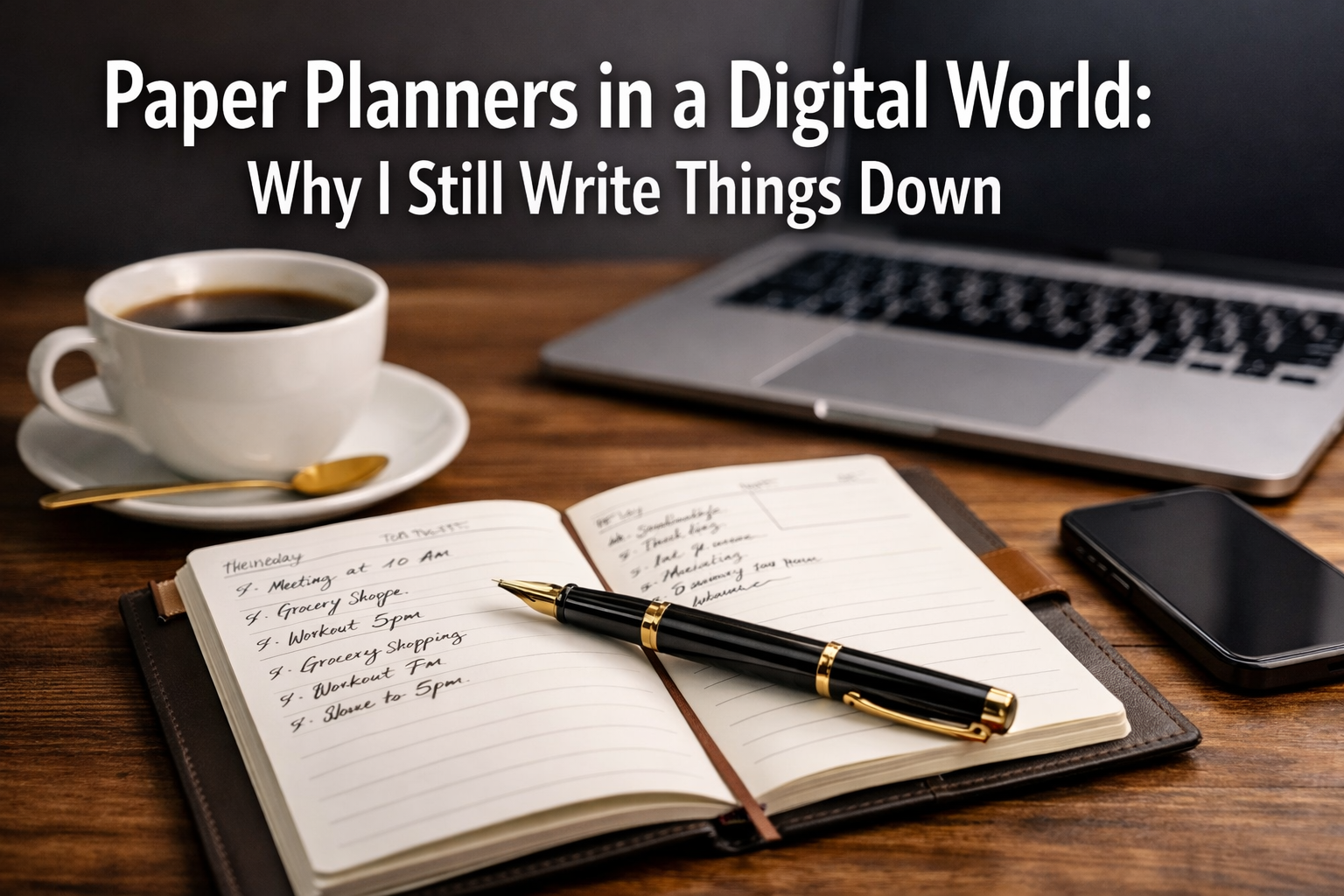

In an era dominated by relentless digital notifications, endless apps, and the omnipresent glow of screens, the very notion of picking up a pen and paper can feel like a quaint relic from a bygone age. Yet, despite the undeniable efficiency and convenience offered by digital tools, a significant number of individuals, including seasoned professionals and students alike, are purposefully returning to or steadfastly maintaining their use of physical planners. This article delves into the profound appeal and enduring relevance of Paper Planners in a Digital World: Why I Still Write Things Down, exploring the cognitive benefits of handwriting, practical methodologies, and the unique advantages that traditional planning offers in our hyper-connected lives in 2026.
Key Takeaways
- Cognitive Advantages of Handwriting: Writing by hand actively engages more parts of the brain, improving memory, comprehension, and critical thinking compared to typing.
- Reduced Digital Distraction: Paper planners offer a dedicated, screen-free space for focus, free from the endless notifications and temptations of digital devices.
- Enhanced Personal Connection: The tactile experience of writing, along with the ability to personalize pages, fosters a deeper, more meaningful connection with one's goals and tasks.
- Flexible Hybrid Approaches: Combining the best of both worlds – paper for daily planning and digital for long-term storage – offers an optimized system for modern productivity.
- Mindfulness and Stress Reduction: The deliberate act of planning on paper can serve as a mindful practice, helping to reduce stress and improve mental clarity.
The Cognitive Benefit of Handwriting
The act of putting pen to paper is far more than just transferring information; it's a powerful cognitive exercise. Research consistently shows that handwriting stimulates unique neural pathways that typing does not. When individuals write notes or plan their day by hand, they engage different areas of the brain, leading to enhanced memory retention and deeper processing of information. This is particularly relevant for those managing complex schedules or intricate project details. The slower, more deliberate pace of handwriting encourages synthesizing information rather than merely transcribing it, forcing the brain to evaluate and prioritize what is truly important.
Consider a student taking notes in a lecture. Those who handwrite their notes tend to remember the material better and process concepts more deeply than those who type. This isn't just about speed; it's about the cognitive effort involved. Handwriting requires fine motor skills and spatial awareness, creating a more intricate neural trace in the brain. For professionals juggling multiple commitments, this means that writing down tasks, goals, and appointments in a paper planner can lead to a stronger recall and a clearer understanding of priorities. It helps cement commitments in one's mind, making it easier to stick to them. This cognitive advantage underscores a core reason why many find paper planners indispensable in a world awash with digital alternatives.
The tactile experience also plays a role. The feel of the paper, the resistance of the pen, and even the unique scent of a new notebook contribute to a multi-sensory experience that digital interfaces simply cannot replicate. This sensory engagement helps create a more memorable and personal connection with the information being recorded. For example, when exploring opportunities like Canada Job Seeker Visa in 2026: New Path for Foreign Workers, jotting down key dates, requirements, and personal action items in a physical planner can make the complex process feel more manageable and actionable. The deliberate act of physically marking tasks complete provides a satisfying sense of accomplishment that a digital checkbox often lacks.
Enhanced Focus and Reduced Distraction
One of the most compelling arguments for using paper planners in 2026 is their inherent ability to minimize digital distractions. Our phones, tablets, and computers, while powerful tools, are also portals to an endless stream of notifications, emails, social media updates, and news alerts. Each ping or pop-up vies for our attention, fragmenting our focus and making it challenging to concentrate on the task at hand.
A paper planner, by contrast, is a dedicated tool with a singular purpose. When you open your planner, you are committing to a distraction-free zone. There are no competing apps, no tempting notifications, and no rabbit holes of internet browsing. This dedicated focus allows for deeper concentration when planning, strategizing, or reflecting on your day. For instance, when mapping out a career move such as applying for 62,000 Caregiver Jobs in Canada with Visa Sponsorship: Apply Now, having a physical space to outline steps, deadlines, and required documents can ensure that crucial details are not overlooked due to digital interruptions. This focused environment fosters a sense of calm and control, promoting mindful productivity rather than reactive task management.
Bullet Journaling for Beginners (Simplified)
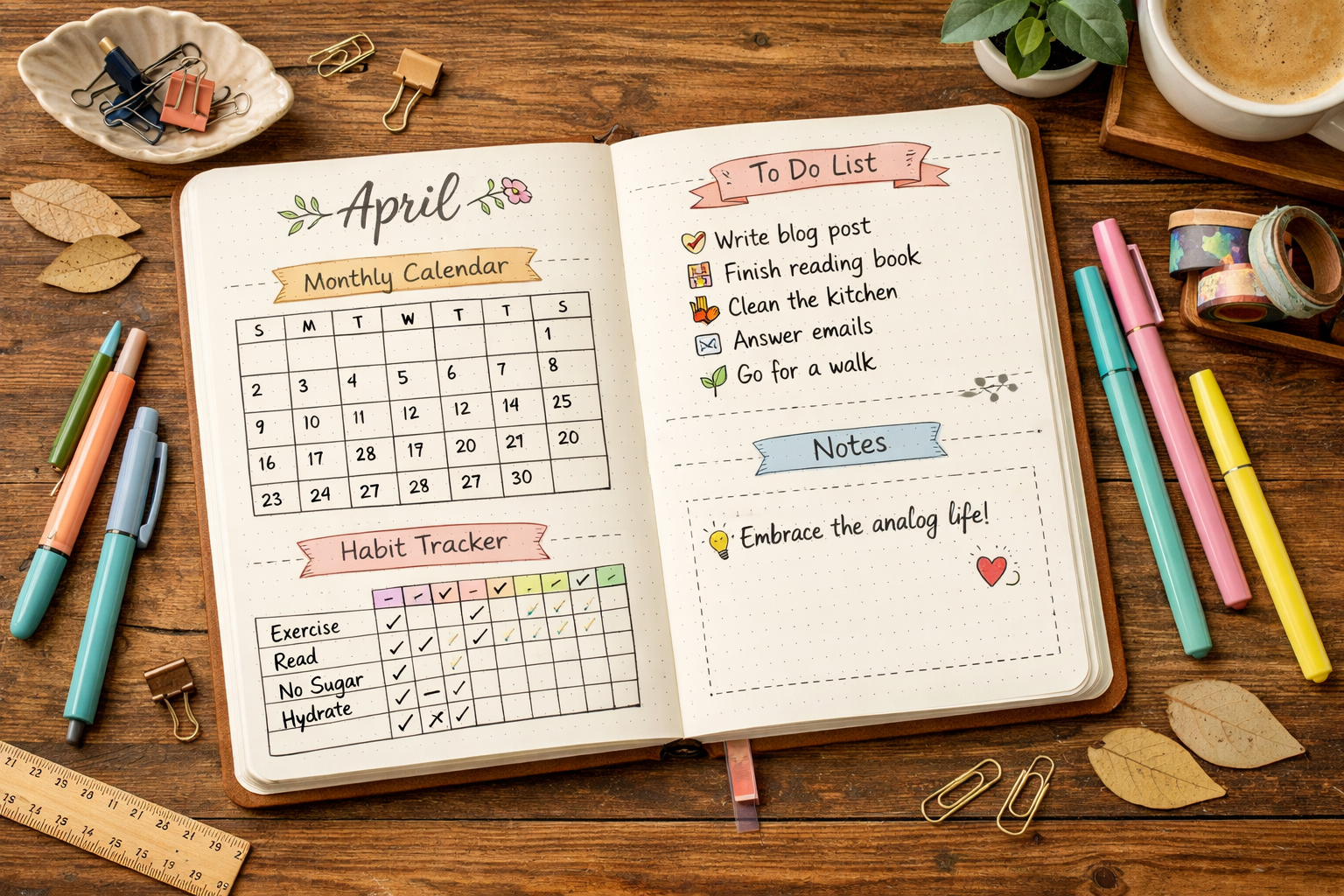
Bullet journaling has surged in popularity as a highly customizable and flexible planning system that blends elements of a planner, diary, and sketchbook. It's an excellent method for those who appreciate the freedom of creating a system that truly reflects their needs, without the rigidity of pre-printed planners. For beginners, the core concept is surprisingly simple, making it an accessible entry point into the world of Paper Planners in a Digital World: Why I Still Write Things Down.
The basic components of a bullet journal include:
- Index: The first few pages are dedicated to an index, allowing you to quickly find specific sections or notes within your journal.
- Future Log: A high-level overview of upcoming months, where you jot down long-term goals, appointments, and events.
- Monthly Log: A two-page spread showing the month's days and key events, along with a task list for the month.
- Daily Log: This is where the magic happens. Each day, you rapidly record tasks, events, and notes using a system of symbols (bullets).
The Bullet Journaling System: Key Symbols
| Symbol | Meaning | Example |
|---|---|---|
| • (Dot) | Task | • Call client about project update |
| ∘ (Open Circle) | Event | ∘ Dinner with family @ 7 PM |
| — (Dash) | Note | — Brainstorming ideas for Q3 strategy |
| > (Arrow Right) | Migrated Task (moved to another day/month) | > Research new scholarship opportunities |
| X (Cross) | Completed Task | X Submit application for 45,000 PhD Scholarships in Australia 2026 Fully Funded Stipend |
| * (Asterisk) | Important/Priority | * Review budget proposal due Friday |
| ! (Exclamation) | Inspiration/Idea | ! New idea for marketing campaign |
Starting a bullet journal requires only a notebook (dotted grid paper is often preferred but not essential) and a pen. The beauty lies in its adaptability. You can add habit trackers, mood logs, gratitude lists, or project outlines as needed. For example, if you're exploring 60,000 STEM Scholarships in the USA 2026: Deadlines & Requirements, you could create a dedicated spread to track application deadlines, required documents, and essay prompts. This hands-on approach allows for a deeper engagement with your planning process, turning it into a creative outlet rather than a chore. The intentionality of setting up your spreads each week or month helps reinforce your goals and priorities.
The "Hybrid" Method: Paper for Day-to-Day, Digital for Storage
For many, the debate between paper and digital is not an either/or proposition but rather a question of integration. The "Hybrid" method harnesses the strengths of both worlds, leveraging paper for its cognitive and focus-enhancing benefits for daily and weekly planning, while utilizing digital tools for long-term storage, recurring reminders, and collaborative efforts. This approach provides a robust and flexible system for managing the complexities of modern life in 2026.
How the Hybrid Method Works:
-
Paper for Immediate Action and Focus:
- Daily Task Lists: Use your paper planner for today's to-dos, appointments, and immediate priorities. The act of writing these down helps commit them to memory and provides a satisfying visual cue as you cross them off.
- Brainstorming and Idea Generation: The freeform nature of paper is ideal for mind maps, sketching ideas, and unstructured thinking.
- Meeting Notes: Capture key discussions and action items by hand, allowing for better comprehension and synthesis.
- Journaling and Reflection: Use paper for personal reflections, gratitude practices, or quick thought dumps to clear your mind.
-
Digital for Long-Term Organization and Accessibility:
- Calendar and Appointments: Use a digital calendar (e.g., Google Calendar, Outlook Calendar) for all future appointments, recurring events, and shared family schedules. Set reminders that can pop up on your devices.
- Project Management: For complex projects with multiple stakeholders, digital project management tools (e.g., Asana, Trello) are indispensable for tracking progress, delegating tasks, and facilitating communication.
- Archiving and Reference: Scan important handwritten notes or meeting summaries and store them digitally in cloud services (e.g., Dropbox, Evernote, OneNote). This ensures you have a searchable, accessible archive without the clutter of physical paper.
- Goal Tracking: Long-term goals, such as those related to 30,000/yr MBA Scholarships in the U.S. for International Students: No GMAT, can be tracked in digital spreadsheets or dedicated goal-setting apps, offering analytics and progress visualization.
- Travel Itineraries and Documents: Digital platforms are perfect for storing flight details, hotel reservations, and visa documents for trips, especially when considering opportunities like Relocate to the UK with Your Family: Skilled Worker Visa Explained 2026.
This dual approach ensures you get the best of both worlds: the focused, tactile, and cognitively beneficial aspects of paper for what matters most in the present, combined with the power, accessibility, and storage capabilities of digital tools for the future and for shared information. It creates a robust system that can adapt to various personal and professional demands, truly embracing Paper Planners in a Digital World: Why I Still Write Things Down.
Review of Specific Notebooks: Leuchtturm vs. Moleskine
When choosing a paper planner or notebook, the quality and features of the physical item itself significantly impact the user experience. Two brands frequently stand out in discussions among paper enthusiasts: Leuchtturm1917 and Moleskine. Both offer premium notebooks, but they cater to slightly different preferences, making a closer look valuable for anyone serious about Paper Planners in a Digital World: Why I Still Write Things Down.
Leuchtturm1917
Leuchtturm1917, a German brand, has gained immense popularity, particularly within the bullet journaling community, for its thoughtful features.
- Paper Quality: Features 80 gsm (grams per square meter) acid-free paper. While not as thick as some art-grade papers, it's generally well-regarded for minimizing ghosting (where ink shows through on the other side) and feathering (ink bleeding outwards).
- Page Numbering & Index: Perhaps its most celebrated feature is the pre-printed page numbers and a blank table of contents (index) at the front. This makes organization and finding specific notes incredibly easy, a huge boon for any planner or bullet journal system.
- Dot Grid Option: Leuchtturm offers a wider variety of page rulings, including popular dot-grid paper, which provides guidance for writing and drawing without being as intrusive as lines or squares.
- Pocket & Elastic Closure: Each notebook includes an expandable pocket in the back cover, perfect for loose notes or receipts, and a durable elastic band to keep the notebook securely closed.
- Labels: Comes with sticker labels for the spine and cover, ideal for archiving.
- Binding: Lies relatively flat when open, making it comfortable to write across the entire page.
- Durability: The hardcovers are robust and withstand daily wear and tear well.
Moleskine
Moleskine, with its iconic black cover and rich history (claiming lineage from notebooks used by artists like Van Gogh and Picasso), offers a distinct aesthetic and experience.
- Paper Quality: Typically uses 70 gsm acid-free paper. This paper is generally thinner than Leuchtturm's and can be more prone to ghosting and feathering with certain pens, especially fountain pens or markers.
- Minimalist Design: Moleskine notebooks are known for their sleek, minimalist design. They usually do not include page numbers or an index, appealing to those who prefer a less structured starting point.
- Page Rulings: Offers ruled, plain, squared, and dotted options, though the dot grid is less common in their standard line compared to Leuchtturm.
- Pocket & Elastic Closure: Like Leuchtturm, Moleskine notebooks also feature an expandable inner pocket and an elastic band closure.
- Binding: The binding is sturdy, but some users find that Moleskine notebooks don't always lie perfectly flat, especially when new.
- Durability: The covers are durable, and the overall construction is solid.
- Brand Heritage: Carries a strong brand identity and a sense of tradition, which appeals to many users.
Which One for You?
Choosing between a Leuchtturm1917 and a Moleskine often comes down to personal preference for paper feel, pre-existing features, and intended use.
- Choose Leuchtturm1917 if: You value built-in organizational features like page numbers and an index, prefer dot-grid paper, and want paper that holds up better to various inks. It's often the go-to for bullet journalers due to its inherent structure.
- Choose Moleskine if: You appreciate a more minimalist design, a thinner, smoother paper feel (and don't mind potential ghosting), and are drawn to the brand's classic aesthetic. It's excellent for sketching, freeform note-taking, or a clean, elegant planner.
Both brands are excellent choices for anyone looking to embrace the tangible benefits of a paper planner in 2026. The selection ultimately enhances the personal connection and effectiveness of the planning process, solidifying the choice to use physical tools in a digital landscape.
Conclusion: Disconnecting to Reconnect with Your Tasks
In a world that increasingly demands our attention through digital channels, the deliberate choice to embrace paper planners is more than just a preference; it's a strategic decision. It's about recognizing the profound cognitive advantages of handwriting, the invaluable benefit of focused, distraction-free work, and the unique satisfaction that comes from a tangible, personalized planning system. Paper Planners in a Digital World: Why I Still Write Things Down isn't about rejecting technology; it's about integrating it wisely, understanding where analog tools still offer an unparalleled edge.
By choosing to disconnect from the digital noise for even a portion of your planning and task management, you are, in essence, reconnecting with your tasks on a deeper, more meaningful level. You're fostering better memory, enhancing critical thinking, and cultivating a sense of calm and control in an often chaotic environment. Whether you opt for a structured planner, a customizable bullet journal, or a hybrid system that marries the best of both worlds, the benefits of pen and paper are undeniable and enduring.
Actionable Next Steps:
- Experiment with a Basic Planner: Start with a simple, inexpensive notebook and a pen. Don't overthink it. Just try writing down your daily tasks and appointments for a week.
- Explore Bullet Journaling: If customization appeals to you, watch a few beginner tutorials on bullet journaling. You might find a system that perfectly fits your unique workflow.
- Implement a Hybrid System: Don't feel pressured to abandon digital tools entirely. Identify which tasks are best suited for paper (e.g., daily to-dos, brainstorming) and which are better handled digitally (e.g., long-term appointments, archiving).
- Invest in Quality Tools (Optional): Once you've committed, consider a quality notebook like a Leuchtturm1917 or Moleskine, and a pen you enjoy writing with. The tactile pleasure can enhance the experience.
- Schedule "Paper Time": Designate specific times each day or week to interact with your paper planner. Treat this as protected time for focused planning and reflection.
Embracing paper planners in 2026 is a powerful act of intentionality. It's a testament to the enduring value of traditional methods in enhancing productivity, mindfulness, and personal effectiveness. Disconnect to truly reconnect with your goals and tasks, and discover the profound impact a simple piece of paper and a pen can have on your success.