
In the fast-paced world of 2026, where remote work and flexible schedules have become more commonplace, the lines between professional life and personal space have increasingly blurred. This integration, while offering unparalleled freedom, also presents a unique set of challenges. One of the most significant is effectively dealing with distractions: kids, pets, and deliveries that can disrupt focus and productivity. For many, the home environment, once a sanctuary from work, is now the primary workspace, bringing with it the joyful chaos of family life, the constant companionship of pets, and the frequent chime of the doorbell announcing another package. Navigating this dynamic requires deliberate strategies and a proactive approach to maintain professional efficacy without sacrificing personal well-being.
Key Takeaways
- Implement a 'Traffic Light' System: Create a visual communication system with your family to signal availability and focus levels, helping manage interruptions effectively.
- Invest in Noise-Canceling Technology: High-quality headphones can create a personal quiet zone, significantly reducing auditory distractions from kids, pets, and external noises.
- Leverage Flexible Working Hours: Strategically scheduling deep work during quieter periods, such as early mornings or late evenings, can maximize productivity.
- Proactively Manage Deliveries: Utilize delivery scheduling options, smart home devices, and designated drop-off points to minimize interruptions from couriers.
- Establish Clear Boundaries: Communicate expectations to family members about work time and personal time, fostering a supportive environment that respects individual needs.
The "Traffic Light" System for Family Interruptions
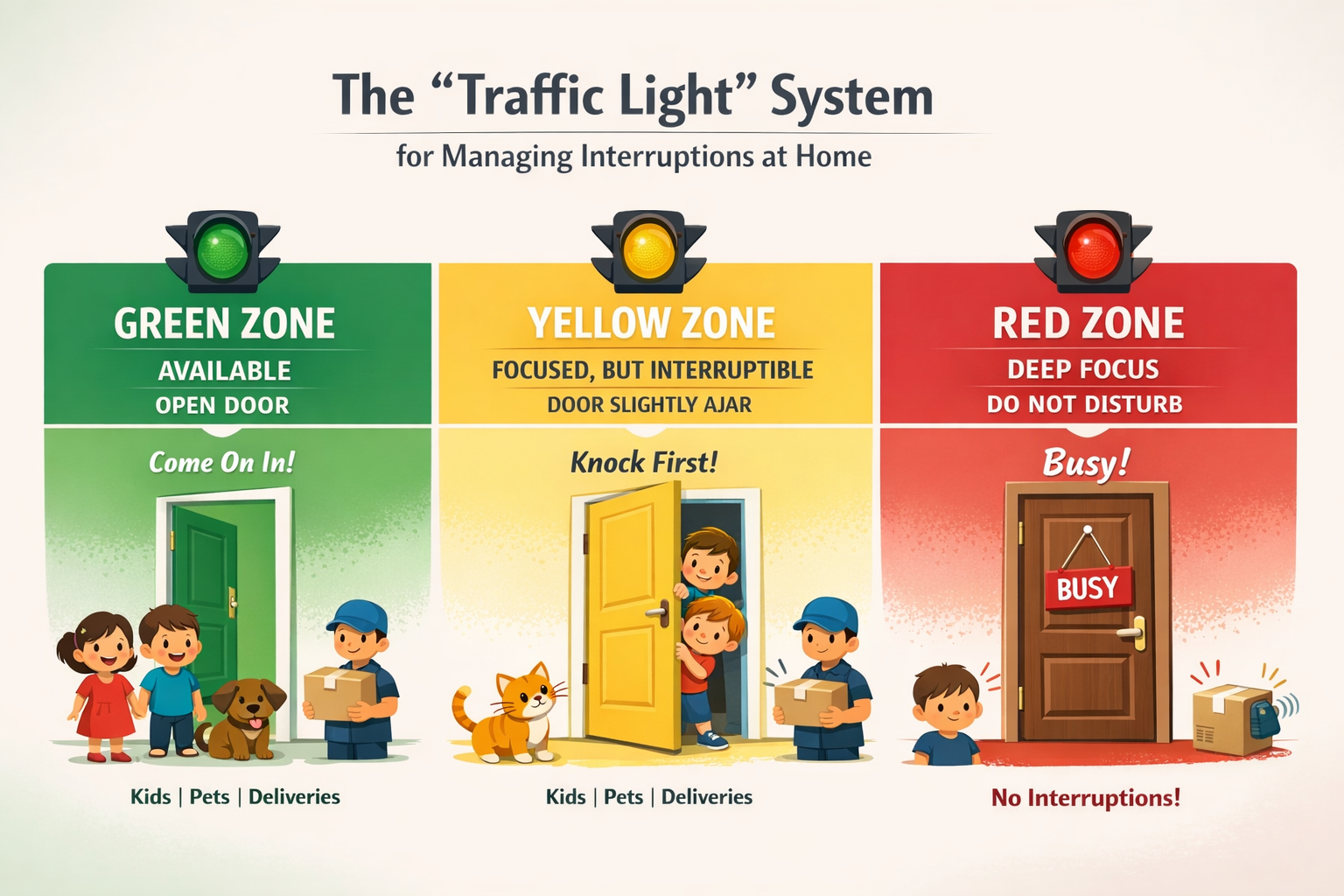
Managing the unpredictable nature of children and pets while attempting to concentrate on work can often feel like an impossible task. A highly effective and visually intuitive strategy is to implement a "Traffic Light" system, which provides clear, non-verbal cues about your availability. This system, easily understood by children (and even, to some extent, pets through consistent training), helps set boundaries without constant verbal redirection.
Imagine a small, easily visible sign on your office door or desk:
- 🟢 Green Light (Go/Available): This signifies that you are available for interruptions, conversation, or play. Your door might be wide open, or you might be sitting in a common area. This is the ideal time for kids to ask questions or for pets to seek attention.
- 🟡 Yellow Light (Slow Down/Interrupt if Urgent): This indicates that you are focused but can be interrupted for truly important matters. The door might be slightly ajar, or you might wear one earbud instead of two. This teaches children to consider the urgency of their need before interrupting. For pets, this might mean a quick pat, but not extended playtime.
- 🔴 Red Light (Stop/Do Not Disturb): This is for periods of deep concentration, important meetings, or tasks requiring absolute focus. The door should be closed, and a clear "Do Not Disturb" sign should be visible. This teaches children the importance of respecting quiet time and helps manage expectations about your availability. For critical remote meetings, this is essential.
Implementing this system requires consistent communication and reinforcement. Explain the meaning of each color to your children in an age-appropriate manner. Practice with them, perhaps using a timer, and reward their adherence to the system. For pets, establishing a routine that includes dedicated play and attention times can help reduce their attempts to interrupt during red light periods. This approach helps reduce the stress of constant interruptions and allows for more structured focus time.
Beyond the visual cues, consider incorporating regular breaks into your workday, during which you switch to a "green light" mode. These scheduled breaks allow you to reconnect with your family and give attention to your pets, reducing their need to interrupt your "red light" periods. This strategy is particularly useful for those managing significant responsibilities, perhaps even considering relocation to the UK with family via a skilled worker visa in 2026, where maintaining a healthy work-life balance amidst new surroundings is paramount.
"Effective communication, even non-verbal, is the cornerstone of managing a bustling home office. The 'Traffic Light' system empowers families to respect boundaries and fosters a productive work environment." – Productivity Expert
Noise-Canceling Headphones: A Necessity?
In an environment teeming with the sounds of children playing, pets barking or meowing, and the inevitable doorbell chime, maintaining auditory focus can be an uphill battle. This is where noise-canceling headphones transition from a luxury to a near-necessity for many home-based professionals.
Modern noise-canceling headphones utilize advanced technology to detect and neutralize ambient sounds, creating a remarkably quiet personal workspace. This allows individuals to concentrate on tasks, participate in virtual meetings without background interference, and even enjoy moments of peace amidst a busy household.
Benefits of Noise-Canceling Headphones:
- Enhanced Focus: By blocking out distractions like loud toys, pet noises, or even the hum of household appliances, these headphones create a concentrated environment conducive to deep work.
- Improved Meeting Quality: Clear audio without background interruptions ensures professionalism in virtual calls, which is crucial whether you're working locally or even considering scholarships to study in Germany for free, where consistent virtual engagement might be required.
- Stress Reduction: The constant barrage of noise can contribute to stress and fatigue. Noise-canceling headphones offer a reprieve, allowing for greater calm and sustained energy.
- Signal for Focus: Wearing headphones can also serve as a visual cue to family members, reinforcing the "red light" status and indicating that you are currently engaged in focused work.
- Privacy: They can offer a sense of personal space and privacy, which can be invaluable in a shared living and working environment.
When selecting noise-canceling headphones, consider factors such as comfort for long-term wear, battery life, sound quality for both listening and speaking (if they include a microphone), and the level of noise cancellation offered. Brands vary widely, so reading reviews and trying different models can help find the perfect fit for your specific needs.
Beyond the immediate benefits for focus, these tools contribute to a more sustainable working setup, especially for those in demanding professions. Imagine a scenario where you're trying to concentrate on complex tasks, perhaps managing 140,000 FIFO mining jobs in Western Australia or dealing with intricate details for 45,000 PhD scholarships in Australia for 2026. The ability to block out ambient noise is not just a comfort; it's a productivity enhancer.
Managing Deliveries Proactively
Deliveries can be another significant source of interruption. The doorbell, the knock, the signature requirement—each can pull you away from important tasks. Proactive strategies are key:
- Delivery Instructions: Utilize the option to leave specific delivery instructions (e.g., "leave package at back door," "ring once then leave").
- Smart Doorbells: A smart doorbell allows you to see and communicate with delivery personnel remotely via your phone, often without needing to physically go to the door. Some even allow for pre-recorded messages or remote unlocking of smart locks for secure package drop-off inside.
- Designated Drop-off Zones: Create a clearly marked, secure area for packages that doesn't require direct interaction.
- Scheduling Deliveries: Many services offer options to schedule deliveries for specific windows, allowing you to plan your work around them or choose times when you are less focused.
- Package Lockers/Hubs: Consider using third-party package locker services or local pickup points to redirect deliveries entirely away from your home office.
By implementing a combination of these strategies, the disruption caused by deliveries can be significantly minimized, allowing for fewer interruptions and a more consistent workflow. This is particularly vital for those pursuing advanced studies, like 30,000 MBA scholarships in the U.S. for international students, where uninterrupted study time is crucial for academic success.
Flexible Hours: Working When They Sleep

One of the most powerful tools in dealing with distractions: kids, pets, and deliveries is the strategic use of flexible working hours. For many, especially those with young children or highly energetic pets, the quietest periods of the day are often outside traditional 9-to-5 schedules. Leveraging these "off-hours" can significantly boost productivity and reduce stress.
The Power of Early Mornings
For individuals who are naturally early risers, the pre-dawn hours can be a golden opportunity for uninterrupted work. Before children wake up, pets demand attention, or deliveries begin, there is a profound stillness that can be harnessed for deep focus.
- Undivided Attention: Tackle your most demanding tasks (e.g., strategic planning, complex writing, detailed analysis) when your cognitive resources are at their peak and external interruptions are minimal.
- Proactive Start: Completing significant work before the day officially begins provides a sense of accomplishment and reduces pressure, making subsequent distractions feel less impactful.
- Mental Clarity: The quiet solitude of the early morning can foster greater creativity and problem-solving abilities.
Maximizing Evening Productivity
Similarly, after children are asleep and pets are settled for the night, the late evening can offer another window of opportunity. This period is ideal for tasks that require concentration but might be less demanding than those tackled in the morning, or for catching up on emails and administrative duties.
- Wrap-up Tasks: Use this time to finalize projects, organize your workspace for the next day, or respond to non-urgent communications.
- Personal Development: Engage in online learning, read industry articles, or work on personal projects without the fear of interruption. This could include researching 60,000 STEM scholarships in the USA for 2026 or exploring opportunities for caregiver jobs in Canada with visa sponsorship.
- Reflective Work: The calm of the evening is perfect for reflection, planning, and setting intentions for the upcoming days.
Integrating Flexible Hours with the Traffic Light System
Combining flexible hours with the "Traffic Light" system creates a robust framework for managing distractions. During your chosen "deep work" hours (early morning or late evening), you are effectively in a perpetual "red light" state, albeit one where the household is naturally quiet. During traditional working hours, when household activity is higher, you can alternate between "green" and "yellow" light periods, allowing for family interaction and less demanding tasks.
It's important to remember that not everyone is a morning person or a night owl. The key is to identify your personal peak productivity times and align your most critical work with those periods, leveraging the inherent quietness of the household during "off-hours." This approach isn't about working more hours, but about working smarter and more efficiently within the constraints of your home environment. Furthermore, understanding the nuances of how different work environments affect productivity can be highly beneficial, especially for those considering new career paths like welding jobs with visa sponsorship in New Zealand, which might involve varying schedules.
Conclusion: Managing Expectations with Your Household
Successfully dealing with distractions: kids, pets, and deliveries in a home-based work environment is an ongoing process of adaptation, communication, and strategic planning. It requires a realistic understanding that interruptions are inevitable, but their impact can be significantly mitigated with the right tools and systems. The strategies outlined – from the visual cues of a "Traffic Light" system to the auditory sanctuary of noise-canceling headphones and the strategic deployment of flexible working hours – collectively form a powerful toolkit for maintaining productivity and peace.
The core of these strategies lies in clear communication and setting realistic expectations with everyone in your household, including yourself. Children, pets, and even delivery personnel operate best when boundaries are understood and routines are established. Teach your children about your work needs, involve them in creating the "Traffic Light" system, and ensure they have designated times for your undivided attention. For pets, consistent routines for walks, playtime, and feeding can reduce their need to interrupt. For deliveries, proactive management minimizes surprises.
Embrace flexibility and self-compassion. There will be days when despite your best efforts, focus remains elusive. On those days, acknowledge the challenge, adjust your schedule if possible, and extend grace to yourself and your family. The goal is not to eliminate all distractions, but to manage them effectively so that you can thrive professionally while fully enjoying the rich tapestry of your home life in 2026 and beyond. By implementing these actionable steps, you can cultivate a more harmonious and productive home office environment.
SEO Meta Title: Master Distractions: Kids, Pets & Deliveries at Home
SEO Meta Description: Learn expert strategies for dealing with distractions from kids, pets, and deliveries in your 2026 home office. Boost focus and productivity.