
The quiet hum of the refrigerator, the gentle tap of keyboard keys, and the occasional whir of a fan – for many remote workers, these sounds are the daily soundtrack of their professional lives. While working remotely offers unparalleled flexibility and autonomy, it often comes with a significant challenge: loneliness. The absence of incidental social interactions, impromptu coffee breaks, and water cooler conversations can leave individuals feeling isolated, impacting both well-being and productivity. Handling Loneliness as a Remote Worker requires intentional effort and strategic approaches to foster connection in a predominantly digital landscape. As we navigate 2026, understanding and actively implementing methods to bridge this social gap is more crucial than ever for thriving in remote work environments.
Key Takeaways
- Proactive Social Engineering: Loneliness in remote work demands deliberate scheduling and creation of social interactions, rather than waiting for them to happen organically.
- Leverage Virtual Spaces: Utilize platforms like virtual co-working spaces and dedicated "non-work" calls to replicate the social dynamics of an office environment.
- Embrace Physical Proximity: Regularly changing your work environment to public spaces like coffee shops or libraries can significantly reduce feelings of isolation.
- Build Intentional Relationships: Foster connections with colleagues and peers through scheduled calls and virtual social events, moving beyond purely task-oriented communication.
- Prioritize Well-being: Recognize that addressing loneliness is vital for overall mental health and professional effectiveness in a remote setup.
Virtual Co-working Spaces: A Digital Community Hub

One of the most innovative and effective strategies for Handling Loneliness as a Remote Worker is leveraging virtual co-working spaces. These platforms are designed to replicate the shared, productive atmosphere of a physical office, but entirely online. Imagine logging into a video call, not for a meeting, but simply to work alongside others in virtual silence.
Focusmate: A Case Study in Shared Productivity
Focusmate is a prime example of such a service. It connects users for 50-minute virtual co-working sessions. You log in, get paired with another remote worker from anywhere in the world, and briefly share your goals for the session. Then, you both mute your microphones and work. The simple act of seeing another person focused on their tasks can create a powerful sense of accountability and companionship. It's not about constant conversation; it's about shared presence and a subtle acknowledgment that you're not alone in your workspace.
Benefits of Virtual Co-working:
- Accountability: Knowing someone else is watching (even peripherally) can boost focus.
- Reduced Isolation: The visual presence of another human being can significantly alleviate feelings of solitude.
- Structured Breaks: The 50-minute session structure encourages regular, short breaks, promoting better work habits.
- Global Connection: Opportunities to interact briefly with people from diverse backgrounds and locations.
"Virtual co-working isn't about constant chatter; it's about the profound comfort of shared presence. It turns the solitary desk into a digital shared space."
For remote workers who might otherwise spend their entire day in complete solitude, these virtual spaces offer a crucial antidote. They provide just enough human interaction to feel connected without being distracting. This approach helps in actively combating the feeling of being cut off, which is essential for thriving in a remote role. Many people seeking global opportunities, whether through caregiver jobs in Canada with visa sponsorship or welding jobs with visa sponsorship in New Zealand, often find themselves in new, unfamiliar environments. Virtual co-working can be especially beneficial for these individuals, providing a consistent sense of community regardless of their physical location.
The Coffee Shop Rotation: Getting Out of the House
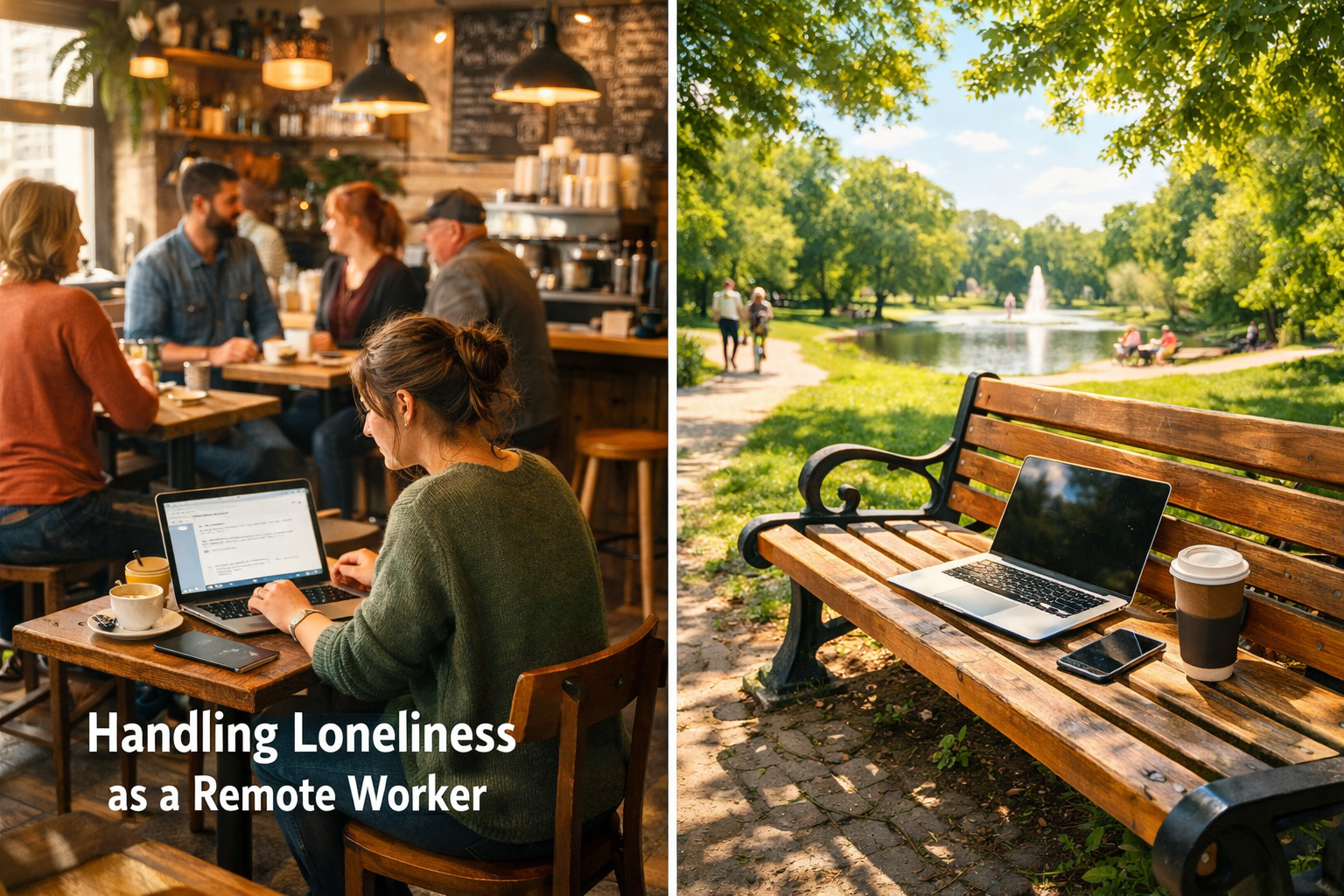
While digital solutions are invaluable, the physical environment plays a huge role in Handling Loneliness as a Remote Worker. Staying within the same four walls day in and day out can amplify feelings of isolation. Changing your physical workspace, even just for a few hours, can provide a much-needed mental refresh and a dose of incidental social interaction.
The Power of Third Places
Sociologists refer to "third places" as environments distinct from home and work, where individuals can relax, socialize, and build community. Coffee shops, libraries, public parks, and even co-working spaces (the physical kind) serve as excellent third places for remote workers.
How to Implement a Coffee Shop Rotation:
- Identify Local Spots: Make a list of cafes, libraries, or quiet public spaces near your home.
- Schedule it In: Treat these outings as appointments. Block out time in your calendar for "work from café" sessions.
- Vary Your Routine: Don't go to the same place every day. A rotation keeps things fresh and exposes you to different environments and people.
- Embrace the Ambience: The background hum of conversation, the aroma of coffee, and the sight of others going about their day can be incredibly comforting and stimulating, reducing the feeling of being alone.
Consider the mental shift: instead of just working from home, you're working from a coffee shop. This subtle change in perspective can significantly impact your mood and productivity. Even if you don't directly interact with anyone, the mere presence of others can combat the deep sense of solitude. For those who have recently relocated to the UK with family on a skilled worker visa, exploring local third places can be an excellent way to integrate into a new community and build connections outside of their immediate household. Similarly, students pursuing fully funded Master's scholarships in Canada in 2026 can find these spaces invaluable for studying and meeting new people in their host country.
| Environment Type | Benefits for Remote Workers | Social Interaction Level |
|---|---|---|
| Home Office | Comfort, focus, no commute | Low (can be isolating) |
| Coffee Shop | Ambience, background noise | Incidental, passive |
| Public Library | Quiet, focused, diverse | Minimal, respectful |
| Co-working Space | Structure, networking | Moderate, intentional |
| Park/Outdoor | Fresh air, change of scene | Low, recreational |
This structured approach to varying your work environment is a proactive step in Handling Loneliness as a Remote Worker, ensuring that your days are not monotonous and your social needs, however subtle, are being met.
Scheduling "Non-Work" Calls with Colleagues
In a remote setting, most interactions with colleagues are task-oriented. "How's project X coming along?" or "Can you review document Y?" These conversations are crucial for work, but they rarely build the kind of camaraderie found in an in-person office. To effectively address Handling Loneliness as a Remote Worker, it's vital to intentionally schedule non-work-related interactions.
Recreating the Water Cooler Moment Virtually
Think about the casual chats that happen in a traditional office: discussing weekend plans, sharing funny stories, or just complaining about Monday morning. These informal interactions are the glue that builds team cohesion and personal relationships. They don't disappear in remote work, but they do require deliberate creation.
Strategies for Non-Work Calls:
- Dedicated "Coffee Breaks": Suggest a 15-minute video call with a colleague simply to chat about anything but work. Make it a recurring appointment.
- Virtual Lunch Dates: Schedule a video call during lunch, where colleagues eat together and chat informally.
- Team Socials: Organize virtual happy hours, game nights, or trivia sessions with your team. Even once a month can make a huge difference.
- "Walk and Talk" Calls: If appropriate, suggest a colleague take a casual call with you while both are on a walk, combining exercise with social interaction.
- Interest-Based Groups: Form virtual clubs around shared hobbies – a book club, a gaming group, or a virtual cooking class.
These intentional social interactions are not just "nice-to-haves"; they are essential components of a healthy remote work culture. They help team members feel valued as individuals, not just as contributors to a project. This human connection fosters trust, improves communication, and significantly reduces feelings of isolation. For individuals considering Canada Job Seeker Visa in 2026, establishing these kinds of connections with new colleagues or professional networks will be crucial for successful integration into a new work environment. Similarly, new arrivals to the UK on a skilled worker visa can benefit immensely from proactive outreach to colleagues to build a support system.
Benefits of Scheduled Non-Work Interactions:
- Stronger Team Bonds: Deepens relationships beyond professional tasks.
- Improved Morale: Fosters a sense of belonging and support.
- Reduced Stress: Provides a mental break and an outlet for personal connection.
- Enhanced Communication: Builds rapport that can positively impact work-related interactions.
Conclusion: Engineering Social Interaction Intentionally
The landscape of work has fundamentally shifted, and with the rise of remote roles, so too have the challenges. Handling Loneliness as a Remote Worker is not a passive endeavor; it requires a conscious, proactive approach to engineer social interactions that might otherwise occur organically in a traditional office. As we move through 2026, the success and well-being of remote professionals will largely depend on their ability to build and maintain robust personal and professional networks.
From leveraging the focused companionship of virtual co-working spaces like Focusmate to strategically varying your physical workspace with a coffee shop rotation, and most importantly, scheduling dedicated "non-work" calls with colleagues, the tools and strategies are available. The key lies in recognizing that social connection is a vital component of productivity and mental health, not an optional add-on.
Actionable Next Steps:
- Audit Your Week: Take a moment to review your typical work week. How many genuinely social interactions (not task-focused) do you have? Identify gaps.
- Experiment with Virtual Co-working: Sign up for a free trial of a virtual co-working platform and commit to at least three sessions this week.
- Plan a "Work-from-Third-Place" Day: Schedule one day a week to work from a local coffee shop, library, or co-working space.
- Initiate a Non-Work Call: Reach out to a colleague and suggest a 15-minute virtual coffee break to chat about anything outside of work.
- Join a Remote Social Group: Explore online communities or company-sponsored social groups that align with your interests.
By intentionally embedding these practices into your routine, you can transform the isolation of remote work into an opportunity for focused productivity balanced with meaningful connection. Remember, you don't have to navigate the remote work journey alone. Building a supportive network is an investment in your well-being and your career.
SEO Meta Title: Remote Work Loneliness: Top Strategies for Connection in 2026
SEO Meta Description: Feeling lonely as a remote worker? Discover expert strategies for handling loneliness, from virtual co-working to intentional social calls, in 2026.