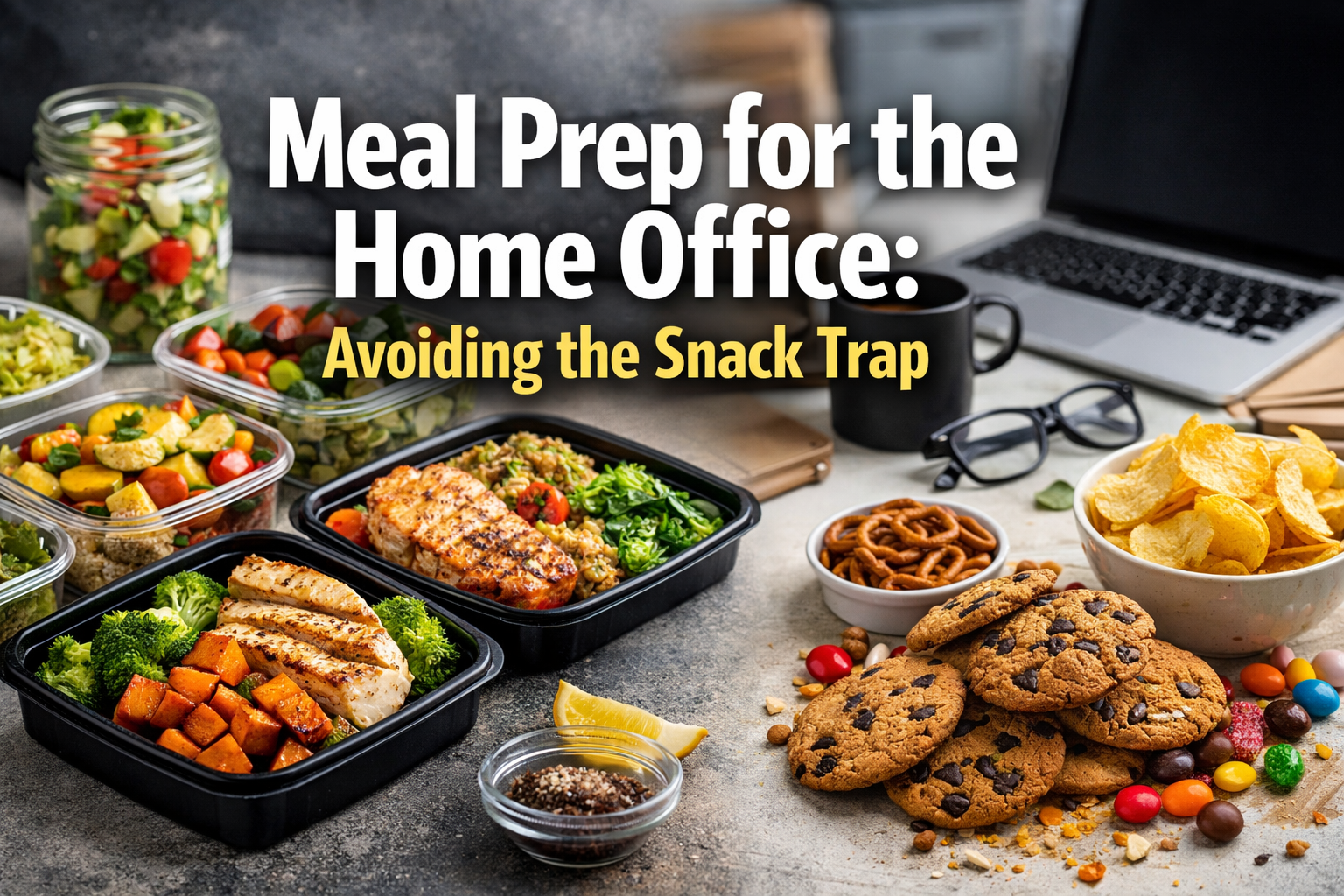

The allure of the kitchen, just a few steps from your home office, can be a productivity killer and a dietary disaster. For many remote professionals, the convenience of constant access to the pantry transforms into a constant battle against the "snack trap." Meal Prep for the Home Office: Avoiding the Snack Trap isn't just about saving time; it's about safeguarding your health, energy levels, and focus throughout the workday. In 2026, as remote work continues to be a cornerstone of many industries, mastering the art of strategic meal preparation has become an indispensable skill for maintaining peak performance and avoiding the pitfalls of impromptu, unhealthy eating.
Working from home offers unparalleled flexibility, but it also presents unique challenges to maintaining a healthy diet. The line between work and personal life can blur, and with it, the boundaries around meal times and snacking habits. Unplanned trips to the refrigerator often result in grabbing highly processed, sugary, or fatty foods that offer a momentary burst of energy followed by an inevitable crash. This article will guide you through the principles and practicalities of effective meal prep, empowering you to navigate your home office environment with sustained energy and optimal nutrition.
Key Takeaways:
- Strategic Planning is Paramount: Dedicate time each week to plan and prepare meals to eliminate impulse snacking.
- Prioritize Nutrient-Dense Meals: Focus on balanced lunches that include protein, fiber, and complex carbohydrates to prevent energy slumps.
- Hydration as a Cornerstone: Implement a "water bottle" rule to ensure consistent hydration, often mistaken for hunger.
- Control Your Environment: Remove tempting, unhealthy snacks from your immediate workspace and "eye line" to reduce cravings.
- Smart Snacking is Key: Keep pre-portioned, healthy snacks readily available for genuine hunger pangs, ensuring they support your energy levels.
3 Lunch Ideas That Don't Cause an Afternoon Crash
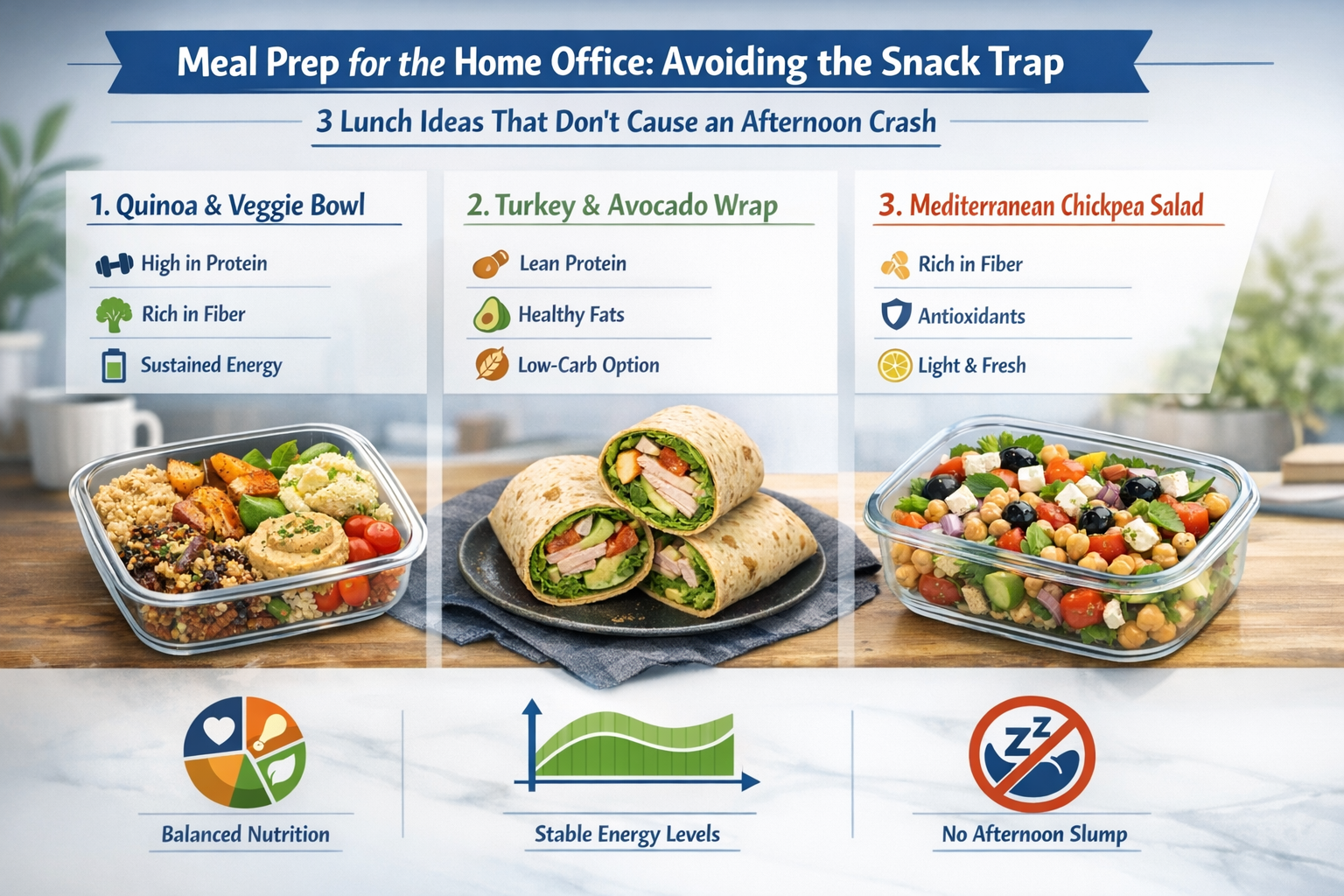
One of the primary goals of Meal Prep for the Home Office: Avoiding the Snack Trap is to ensure your lunches provide sustained energy without leading to that dreaded afternoon slump. The key lies in balancing macronutrients: complex carbohydrates for steady energy release, lean proteins for satiety and muscle support, and healthy fats for hormone regulation and absorption of fat-soluble vitamins. Here are three lunch ideas designed to keep you sharp and focused all afternoon:
1. Quinoa & Grilled Chicken Power Bowl 🥗
This lunch is a powerhouse of nutrition, easy to prepare in advance, and highly customizable.
-
Ingredients:
- 1 cup cooked quinoa (high in protein and fiber)
- 4 oz grilled chicken breast, sliced (lean protein)
- 1/2 cup roasted vegetables (broccoli, bell peppers, zucchini)
- 1/4 avocado, sliced (healthy fats)
- A handful of mixed greens
- Light vinaigrette dressing
-
Preparation Tip: Cook a large batch of quinoa and grill several chicken breasts at the beginning of the week. Roast a tray of your favorite vegetables to mix and match. Assemble bowls daily or prepare several days in advance, keeping the dressing separate until serving.
-
Why it works: Quinoa provides a slow-releasing carbohydrate that prevents blood sugar spikes, while chicken and avocado keep you feeling full and satisfied. The fiber from vegetables aids digestion and adds essential micronutrients. This combination ensures sustained energy and mental clarity, making it an excellent choice for avoiding the snack trap.
2. Mediterranean Lentil Salad with Feta 🍲
Lentils are an unsung hero in meal prep – affordable, packed with protein and fiber, and incredibly versatile.
-
Ingredients:
- 1 cup cooked brown or green lentils
- 1/2 cup chopped cucumber
- 1/2 cup chopped tomatoes
- 1/4 cup crumbled feta cheese (optional)
- 2 tablespoons chopped fresh parsley or mint
- Lemon-tahini dressing (lemon juice, tahini, garlic, water)
-
Preparation Tip: Cook a big batch of lentils until tender but still firm. Chop all your vegetables and store them separately. Mix and dress just before eating to maintain freshness. This salad holds well for 3-4 days in the refrigerator.
-
Why it works: Lentils provide a significant fiber and protein boost, ensuring prolonged satiety. The fresh vegetables add crunch and essential vitamins, while healthy fats from tahini and feta contribute to overall satisfaction. This meal is fantastic for mental focus, providing sustained energy without heaviness.
3. Turkey and Veggie Wraps with Hummus 🌯
A lighter option that’s quick to assemble and great for when you need something convenient.
-
Ingredients:
- 2 whole-wheat tortillas
- 3-4 slices of lean deli turkey breast
- 2 tablespoons hummus
- Mixed greens (spinach, romaine)
- Sliced cucumber, bell peppers, or shredded carrots
-
Preparation Tip: Spread hummus on tortillas, layer with turkey and vegetables. Roll tightly. These can be prepared the night before, but for maximum freshness, assemble them in the morning or just before lunch.
-
Why it works: Whole-wheat tortillas offer complex carbs, while turkey provides lean protein. Hummus adds healthy fats and fiber, contributing to a feeling of fullness. The high vegetable content boosts vitamins and minerals, making this a balanced and energizing lunch that helps with Meal Prep for the Home Office: Avoiding the Snack Trap. For those looking for overseas opportunities in similar fields like healthcare, balancing nutritious meals is equally important, whether you are considering care home jobs in UK with sponsorship or caregiver jobs in Canada with visa sponsorship.
The "Water Bottle" Rule for Hydration
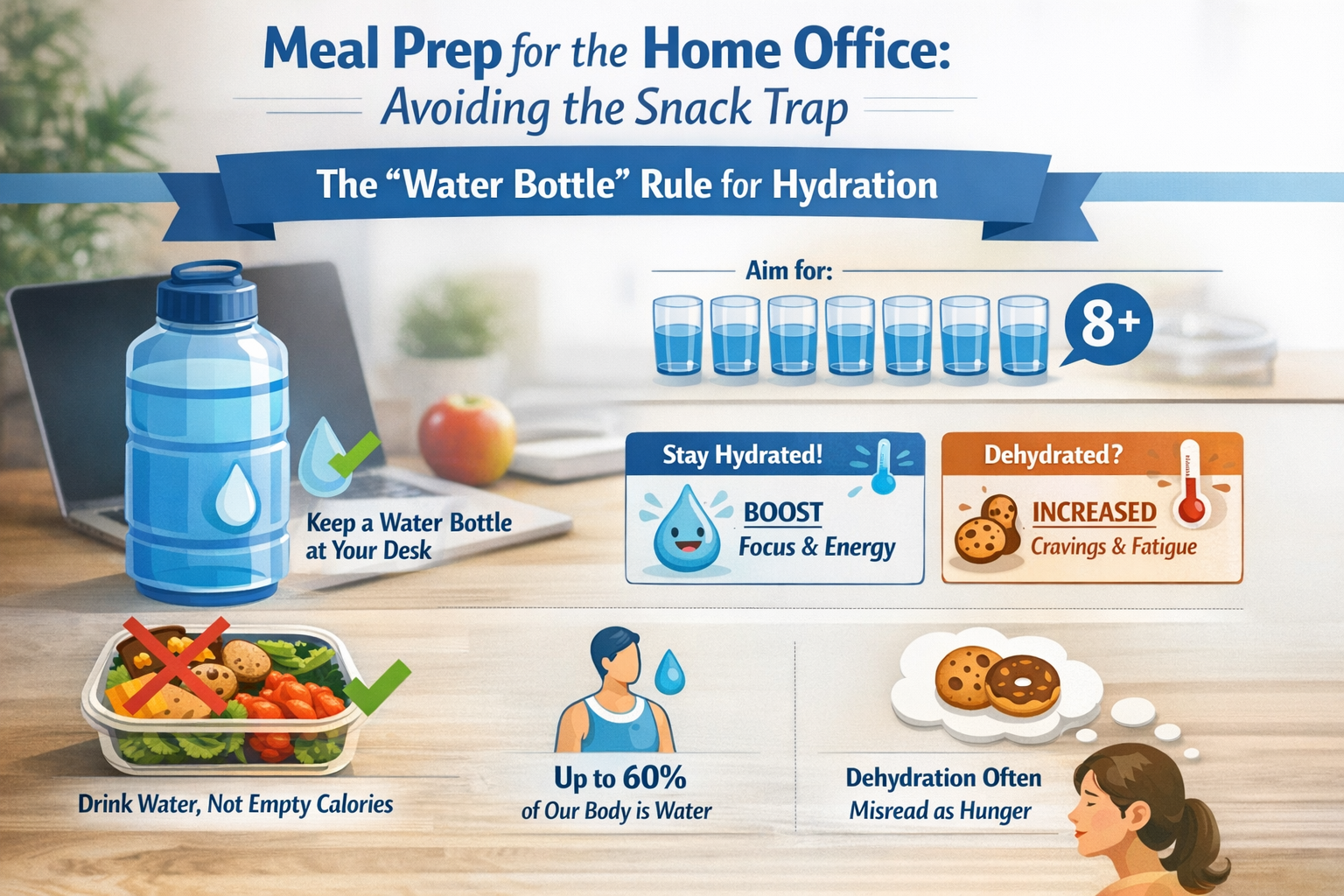
Dehydration is often mistaken for hunger. When your body signals thirst, it can sometimes be misinterpreted as a need for food, leading you straight to the snack cabinet. Implementing the "Water Bottle" rule is a simple yet profoundly effective strategy in Meal Prep for the Home Office: Avoiding the Snack Trap.
The Rule: Keep a large, reusable water bottle (at least 32 oz or 1 liter) filled with water on your desk at all times. Make it a habit to sip from it throughout the day, aiming to refill it multiple times.
-
Why it's crucial:
- Distinguishing Thirst from Hunger: Often, mild dehydration mimics hunger pangs. By consistently hydrating, you reduce the chances of reaching for snacks when your body truly needs water.
- Boosting Metabolism: Proper hydration is essential for metabolic function. When your metabolism is running efficiently, your body uses energy more effectively, reducing cravings for quick fixes.
- Enhancing Cognitive Function: Water is vital for brain health. Staying hydrated can improve concentration, memory, and mood, preventing the foggy brain that might lead you to seek out sugary snacks for a quick mental lift.
- Aids Digestion: Drinking enough water helps your digestive system function smoothly, preventing bloating and discomfort that can sometimes trigger emotional eating.
-
Tips for Success:
- Choose a Bottle You Love: Invest in a water bottle that you enjoy using – perhaps one with a straw, a specific color, or an ergonomic design.
- Set Reminders: Use an app or a simple timer to remind you to drink water every hour or so.
- Infuse for Flavor: If plain water is boring, add slices of lemon, lime, cucumber, mint, or berries for a refreshing twist.
- Make it Visible: Keep the bottle within arm's reach and eye-level to serve as a constant reminder.
"Staying hydrated isn't just about quenching thirst; it's a proactive defense against the home office snack trap, fueling your focus and overall well-being."
Adopting the "Water Bottle" rule can significantly impact your daily calorie intake and overall well-being. This simple habit complements your meal prep efforts by addressing a common trigger for unnecessary snacking. Professionals in demanding environments, whether pursuing MBA scholarships in the U.S. or working in international roles like welding jobs with visa sponsorship in New Zealand, often overlook this fundamental aspect of health, but its impact on sustained energy and focus is undeniable.
Removing Junk Food from the "Eye Line"
Our environment plays a monumental role in shaping our habits. When it comes to Meal Prep for the Home Office: Avoiding the Snack Trap, one of the most effective strategies is to strategically modify your immediate surroundings. This means actively removing tempting, unhealthy foods from your "eye line" – those places where they are easily seen and accessible.
Consider the psychological impact: if a bag of chips is sitting on your desk or visible from your workstation, the mental effort required to resist it is constant. This "decision fatigue" can eventually wear down your willpower, leading to impulsive snacking. Conversely, if healthy options are readily available and unhealthy ones are out of sight (or better yet, out of the house entirely), you're far more likely to make beneficial choices.
Practical Steps to Declutter Your Food Environment:
-
Desk Zone Detox:
- Clear the immediate area: Ensure your desk and any adjacent shelves or surfaces are completely free of cookies, candy, chips, or sugary drinks.
- Replace with healthy alternatives: Instead, keep a bowl of fruit, a container of pre-portioned nuts, or a small bag of baby carrots within easy reach. These are still visible but offer a healthier choice for genuine hunger.
-
Pantry and Refrigerator Reorganization:
- Out of sight, out of mind: Move all high-calorie, low-nutrient snacks to less accessible spots in your pantry – on a high shelf, in the back of a cupboard.
- Front and center healthy: Place your prepped meals, fresh fruits, vegetables, and lean proteins at the front and center of your refrigerator and pantry. This makes them the first thing you see when you open the door.
- Designated "snack" drawer: If you must keep some indulgent items for specific occasions, designate a single, out-of-the-way drawer or container for them. The effort of retrieving them can sometimes be enough to deter impulsive grazing.
-
Strategic Shopping:
- Don't buy it: The most effective way to remove junk food from your eye line is to not bring it into your home in the first place. Plan your grocery list carefully, focusing on whole, unprocessed foods that support your meal prep goals.
- Shop when full: Never go grocery shopping on an empty stomach, as this significantly increases the likelihood of impulse buys of unhealthy items.
-
Mindful Snacking Zones:
- Eat away from your desk: If you do need a snack, make a conscious decision to step away from your workstation. This breaks the pattern of mindless eating while working.
- Use proper dishware: Eating from a plate or bowl, rather than directly from a package, can help with portion control and make the act of eating more intentional.
By proactively shaping your home office and kitchen environment, you reduce the mental energy spent resisting temptation. This strategy is not about deprivation but about making the path of least resistance lead to healthy choices. For individuals aiming for ambitious goals, such as pursuing PhD scholarships in Australia in 2026 or navigating new career paths in exciting places like Canada through the Canada Job Seeker Visa in 2026, maintaining peak mental and physical condition through strategic nutrition is paramount.
Conclusion: Fueling for Focus, Not Just Hunger
Mastering Meal Prep for the Home Office: Avoiding the Snack Trap is more than just a dietary strategy; it's a cornerstone of professional productivity and personal well-being in the remote work era. The constant proximity to your kitchen, while offering convenience, also presents a unique set of challenges that can derail your health goals and diminish your daily focus. By implementing the principles outlined in this article, you actively take control of your nutritional environment and empower yourself to thrive.
The journey begins with conscious planning. Dedicating time each week to thoughtful meal preparation ensures that you have nutritious, balanced options readily available, significantly reducing the temptation to reach for quick, unhealthy fixes. Remember, your lunch should be a source of sustained energy, not a trigger for an afternoon crash. Opt for meals rich in complex carbohydrates, lean proteins, and healthy fats to maintain stable blood sugar levels and mental clarity.
Hydration plays an equally critical role. The "Water Bottle" rule is a simple yet powerful tactic to differentiate between thirst and hunger, ensuring your body receives the vital fluid it needs to function optimally. Finally, environmental control—removing tempting junk food from your "eye line" and making healthy snacks the default choice—is a psychological game-changer. By shaping your surroundings, you make healthy eating the easiest choice, minimizing willpower fatigue and promoting consistent, positive habits.
In 2026, as the landscape of work continues to evolve, the ability to fuel your body and mind effectively from your home office will remain an invaluable asset. By embracing meal prep, you’re not just avoiding snacks; you're investing in sustained energy, enhanced focus, and overall improved well-being, allowing you to dedicate your full potential to your work and personal life.
Actionable Next Steps:
- Schedule Your Prep Time: Block out 2-3 hours this weekend in your calendar specifically for meal planning and preparation.
- Inventory Your Pantry: Identify and relocate (or discard) unhealthy snack items that are currently in your "eye line."
- Invest in a Water Bottle: Purchase a large, reusable water bottle and commit to keeping it full on your desk throughout the workday.
- Try One New Recipe: Select one of the lunch ideas provided and prepare it for the upcoming week.
- Track Your Energy: For a week, pay attention to your energy levels and snacking habits. Note how changes in your meal prep and hydration impact your workday.