
Staring at screens for hours on end has become an inescapable reality for many in 2026. From professional work to leisure, our digital lives are intertwined with computers, tablets, and smartphones. This constant exposure, however, often comes with a significant downside: digital eye strain, headaches, and disrupted sleep patterns. At the heart of this issue lies blue light, a high-energy visible light emitted by our devices. Fortunately, the realm of software solutions offers powerful tools for Protecting Your Eyes: Software Solutions for Blue Light provide accessible and effective ways to mitigate these risks, ensuring our digital engagement doesn't compromise our long-term ocular health.
Key Takeaways
- Blue Light Exposure Risks: Prolonged exposure to blue light from screens can lead to digital eye strain, headaches, and disruption of the body's natural sleep-wake cycle.
- Software Solutions are Accessible: Tools like f.lux and Windows Night Light offer automated blue light reduction by adjusting screen color temperature, making them easy to integrate into daily routines.
- "Dark Mode" Benefits and Limitations: While Dark Mode can reduce overall screen brightness and contrast, its effectiveness in reducing blue light specifically is nuanced and should be combined with other protective measures.
- The 20-20-20 Rule is Crucial: This simple, no-software rule is a fundamental practice for preventing eye strain, reminding users to take regular breaks and refocus their eyes.
- Holistic Digital Hygiene: Combining software solutions, ergonomic setups, and regular eye breaks forms a comprehensive strategy for maintaining optimal eye health in the digital age.
f.lux vs. Windows Night Light: A Comparison for Protecting Your Eyes: Software Solutions for Blue Light
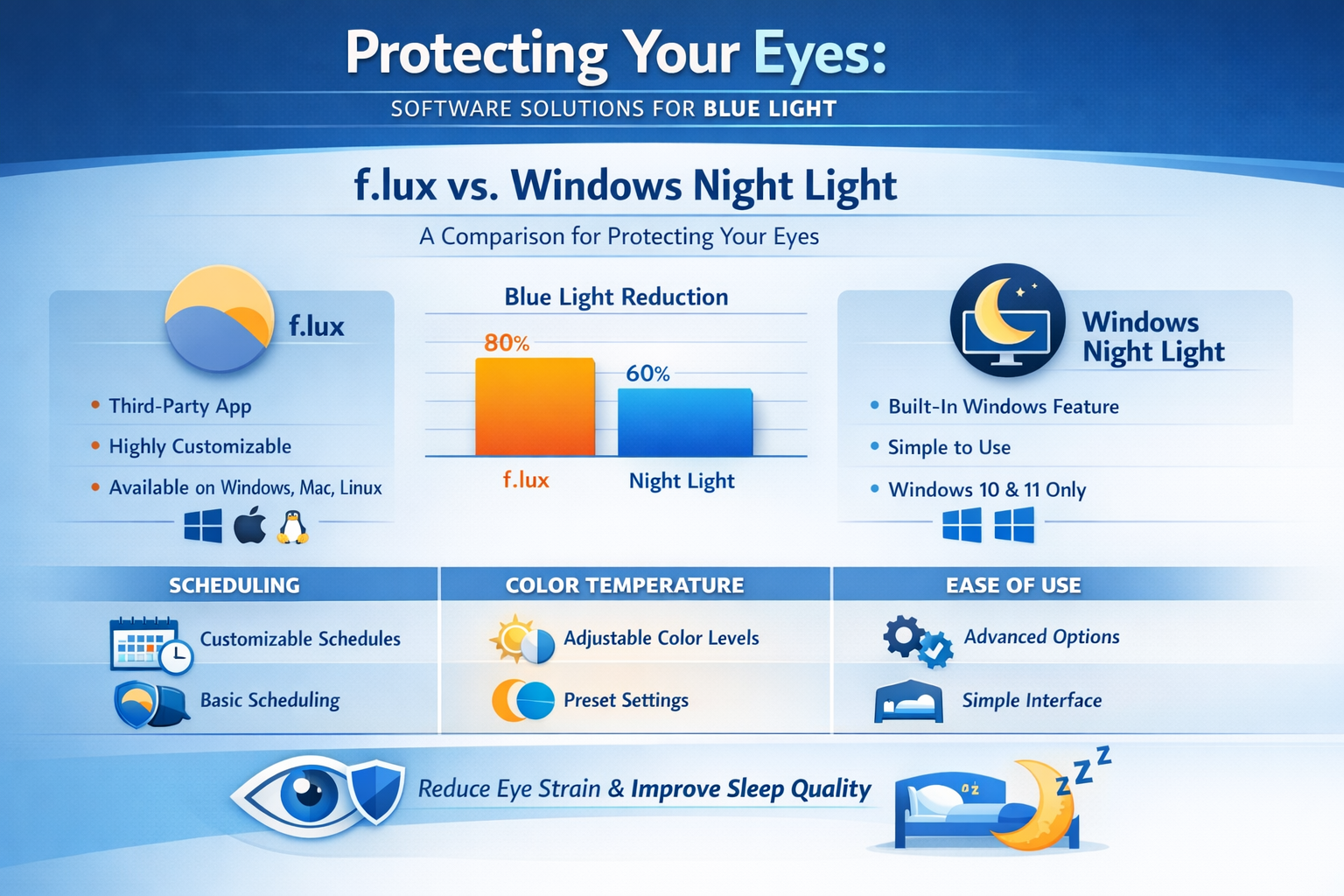
When it comes to software solutions for reducing blue light, two prominent contenders often come to mind: f.lux and Windows Night Light. Both aim to make your screen's color temperature warmer, especially during evening hours, to reduce blue light emission. Understanding their differences can help users choose the best tool for Protecting Your Eyes: Software Solutions for Blue Light tailored to their specific needs.
f.lux has been a pioneer in this space, offering its service for many years across multiple platforms including Windows, macOS, Linux, and even some mobile devices. Its core function is to adjust your screen's color temperature based on the time of day and your geographical location. As the sun sets, f.lux gradually shifts your screen to a warmer, more amber hue, mimicking natural light. This gradual transition is often cited as one of its strengths, making the change less jarring.
Key Features of f.lux:
- Platform Versatility: Available on various operating systems, making it a go-to for cross-device users.
- Advanced Customization: Users can fine-tune color temperatures for different times of day (e.g., "Daytime," "Sunset," "Bedtime"). It also offers various presets like "Halogen," "Fluorescent," and "Candle" for specific effects.
- Movie Mode/Disable for an Hour: Handy features that temporarily disable the warming effect for tasks requiring accurate color reproduction, like graphic design or watching a film.
- Sleep-Focused Adjustments: Designed specifically with circadian rhythms in mind, aiming to help users sleep better by reducing blue light exposure before bed.
Windows Night Light, on the other hand, is Microsoft's built-in solution, integrated directly into the Windows 10 and 11 operating systems. It offers a simpler, more streamlined approach. Users can schedule Night Light to turn on automatically from sunset to sunrise, or manually activate it. The intensity of the warm color can also be adjusted via a slider.
Key Features of Windows Night Light:
- Seamless Integration: Being a native Windows feature, it's easy to access and configure directly from system settings.
- Simplicity: Fewer customization options make it straightforward for users who prefer a 'set it and forget it' approach.
- Scheduling: Allows for automatic activation based on sunset and sunrise times, or custom time ranges.
- Adjustable Strength: A simple slider lets users control the warmth level of the screen.
| Feature | f.lux | Windows Night Light |
|---|---|---|
| Platforms | Windows, macOS, Linux, iOS (jailbroken/older versions) | Windows 10/11 |
| Customization | Highly customizable (color temps, transition speed) | Basic (strength slider, schedule) |
| Scheduling | Automatic by location, custom timings | Automatic by location, custom timings |
| Temporary Disable | Yes (Movie Mode, Disable for an hour) | Yes (manual toggle) |
| Advanced Options | Color effects, sleep settings | None |
| Installation | Separate download and installation | Built-in feature |
Which one is better for Protecting Your Eyes: Software Solutions for Blue Light?
For users who desire granular control over their screen's color temperature, cross-platform compatibility, and more advanced features focused on sleep hygiene, f.lux remains a top choice. Its robust customization options cater to power users and those with specific light sensitivity needs. Many professionals who spend extensive hours in front of their screens, such as those working on complex datasets or involved in FIFO mining jobs in Western Australia, find its adaptability invaluable.
For the average Windows user seeking a simple, effective, and readily available solution, Windows Night Light is perfectly adequate. It performs its primary function of reducing blue light with minimal fuss and integrates seamlessly into the operating system. It's a great starting point for anyone looking to incorporate blue light reduction into their digital routine without needing additional software.
Ultimately, both tools contribute significantly to Protecting Your Eyes: Software Solutions for Blue Light. The "better" option depends on individual preferences for control, platform use, and desired features.
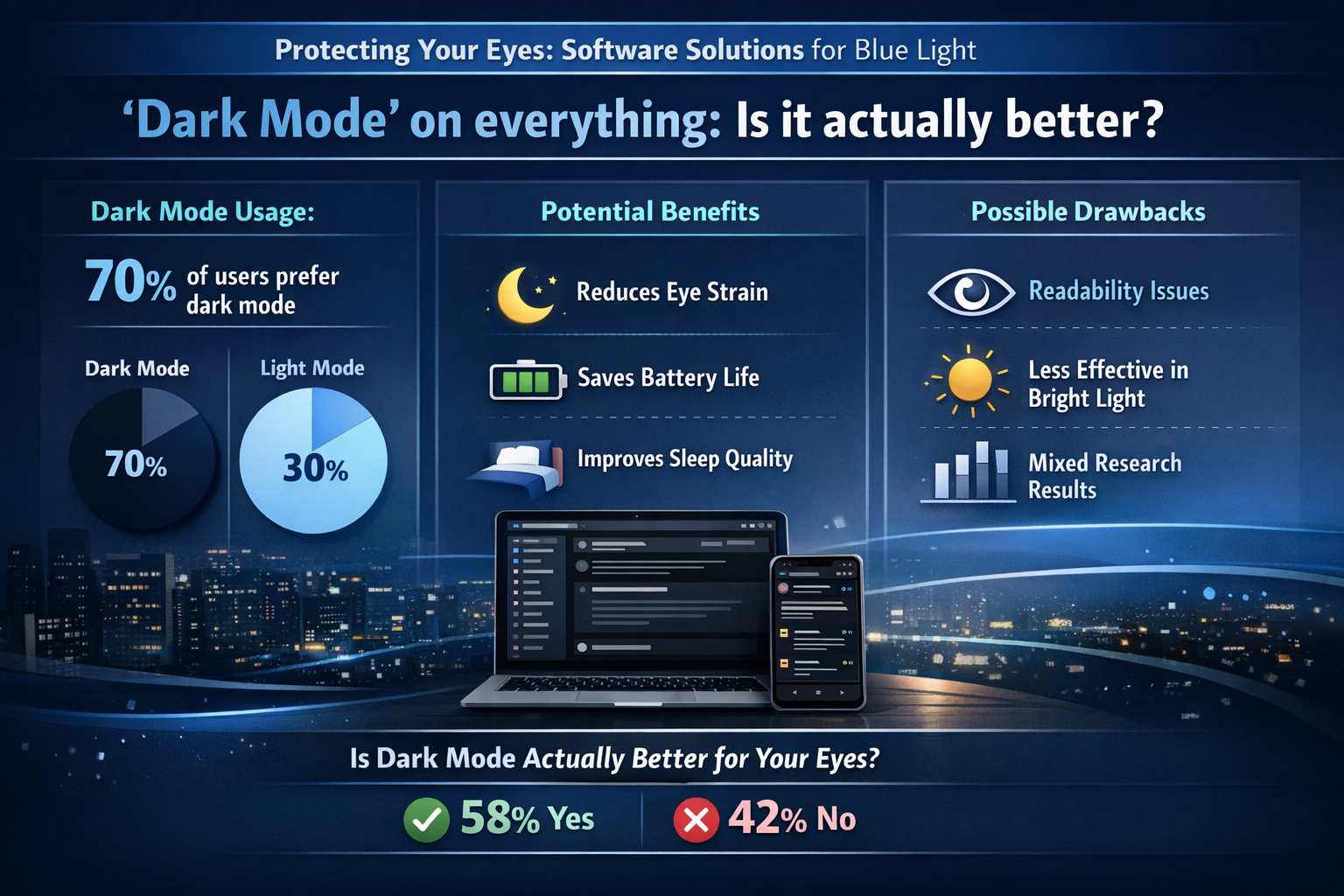
"Dark Mode" on everything: Is it actually better?
The rise of "Dark Mode" across operating systems, applications, and websites has been one of the most prominent UI trends in recent years. Touted for its aesthetic appeal and supposed benefits for eye health, many users have embraced it as a default setting. But when it comes to Protecting Your Eyes: Software Solutions for Blue Light, is Dark Mode truly a panacea, or is its effectiveness more nuanced?
Dark Mode, also known as night mode, black mode, or dark theme, replaces light-colored backgrounds with dark ones and dark text with light text. The primary argument in its favor is that it reduces the overall brightness of the screen, which can be less jarring in low-light environments and potentially reduce eye strain.
Perceived Benefits of Dark Mode:
- Reduced Glare and Brightness: A dark background emits less light, which can be more comfortable for viewing in dim rooms and reduces glare.
- Battery Savings (on OLED screens): For devices with OLED (Organic Light Emitting Diode) displays, black pixels are essentially turned off, leading to noticeable power savings. This is a significant factor for mobile users.
- Improved Contrast (for some): Dark backgrounds with light text can offer better contrast for individuals with certain visual impairments or light sensitivity.
- Aesthetic Preference: Many users simply find Dark Mode visually appealing and less distracting.
The Nuance of Blue Light Reduction:
While Dark Mode undeniably reduces overall screen brightness, its direct impact on blue light emission is not as straightforward as dedicated blue light filtering software. Blue light filters like f.lux or Night Light specifically alter the color temperature of the light emitted, shifting it away from the high-energy blue spectrum towards warmer hues. Dark Mode, however, primarily changes the luminance (brightness) and contrast.
Consider this: even with a dark background, the light-colored text or interface elements still emit blue light. While the total amount of blue light might be less due to fewer bright pixels, the composition of the light from the remaining illuminated pixels is largely unchanged unless combined with a color temperature adjustment.
Potential Downsides and Considerations:
- Readability Issues: For some users, particularly those with astigmatism, reading light text on a dark background can be more difficult. The light "bleeds" into the dark background, a phenomenon known as halation, making text appear blurry or harder to focus on.
- Daytime Use: In well-lit environments, Dark Mode can actually increase eye strain because the pupils have to dilate more to absorb enough light to read the screen. This can lead to increased fatigue.
- Not a Replacement for Blue Light Filters: While beneficial for reducing overall brightness, Dark Mode should not be considered a substitute for software that specifically filters blue light wavelengths if the goal is to protect against circadian rhythm disruption.
Combining Strategies:
The most effective approach for Protecting Your Eyes: Software Solutions for Blue Light often involves a combination of strategies. Using Dark Mode can be a good starting point for reducing overall screen brightness and enhancing visual comfort, especially in low-light conditions. However, for a targeted reduction of blue light's impact on sleep and eye strain, it should be paired with a blue light filtering application like f.lux or Windows Night Light.
Many tech professionals, including those looking into STEM scholarships in the USA 2026 or pursuing advanced studies, understand that a multi-faceted approach to digital well-being is crucial. This includes not just software, but also ergonomic setups and regular breaks, which we'll discuss next.
The 20-20-20 Rule (No software needed)
While software solutions for blue light are incredibly valuable, some of the most effective strategies for protecting your eyes require no technology at all. The "20-20-20 Rule" is a simple, yet powerful, guideline recommended by eye care professionals to combat digital eye strain. It’s a fundamental habit that every screen user in 2026 should adopt, regardless of their profession, whether they are a student applying for undergraduate scholarships in Australia or a professional navigating complex data.
How the 20-20-20 Rule Works:
The rule is straightforward and easy to remember:
- Every 20 minutes: Take a break from your screen.
- Look at something 20 feet away: Shift your gaze from your close-up screen.
- For at least 20 seconds: Allow your eyes sufficient time to relax and refocus.
Why is this rule so effective?
Our eyes are naturally designed for looking at objects at varying distances. When we focus on a screen for extended periods, especially at a close range, the tiny muscles inside our eyes responsible for focusing (ciliary muscles) remain in a state of constant contraction. This sustained effort can lead to:
- Eye Strain: A feeling of discomfort, soreness, or fatigue in the eyes.
- Headaches: Often located around the temples or forehead.
- Blurred Vision: Temporary difficulty in focusing after prolonged screen time.
- Dry Eyes: Reduced blink rate while focusing intensely on a screen.
By following the 20-20-20 Rule, you are actively giving these muscles a much-needed break. Looking at a distant object allows your eyes to relax into their natural, unfocused state. This simple act helps to:
- Reduce Eye Fatigue: It gives the ciliary muscles a chance to rest and recover.
- Prevent Dry Eyes: Shifting focus and blinking more frequently during the break helps to re-lubricate the eyes.
- Improve Focus: Regular breaks can actually improve your ability to concentrate on your work when you return to it.
- Break Monotony: It encourages a brief mental break, which can also contribute to overall well-being.
Implementing the 20-20-20 Rule: Practical Tips
- Set a Timer: Use an alarm on your phone, a dedicated app, or a simple desktop reminder to prompt you every 20 minutes. There are many free apps available that can help automate this.
- Find a "20-Foot" Target: Identify something in your workspace or through a window that is approximately 20 feet away. This could be a picture on the wall, a tree outside, or another distant object.
- Make it a Habit: Consistency is key. Initially, it might feel like an interruption, but with practice, it will become a natural part of your screen-time routine.
- Combine with other Micro-Breaks: Use these breaks to also stand up, stretch, or grab a glass of water. If you are exploring opportunities like care home jobs in UK with sponsorship or other roles that involve long periods of focus, these micro-breaks are essential for sustained performance and health.
The 20-20-20 Rule is an indispensable part of comprehensive digital eye care. While software solutions assist in managing blue light exposure, this rule addresses the physical strain on your eye muscles, complementing software efforts for holistic eye protection.
Conclusion: Digital Hygiene Tips for Longevity
In an increasingly digital world, the challenge of Protecting Your Eyes: Software Solutions for Blue Light and overall digital eye strain is more pressing than ever in 2026. Our reliance on screens for work, education, and leisure means that proactive measures are not just recommended, but essential for long-term ocular health and general well-being. This article has explored various software solutions and practices, highlighting their individual strengths and how they can be integrated into a robust digital hygiene routine.
The journey to healthier digital habits begins with understanding the impact of blue light and prolonged screen exposure. Software tools like f.lux and Windows Night Light offer automated, intelligent ways to adjust screen color temperature, significantly reducing blue light emissions, especially during evening hours. While f.lux provides extensive customization and cross-platform support, Windows Night Light offers a simpler, built-in solution for Windows users. Both are invaluable components of a strategy for protecting your eyes.
We also delved into "Dark Mode," clarifying that while it reduces overall screen brightness and can be aesthetically pleasing, it’s not a direct blue light filter. Its effectiveness is best realized when combined with dedicated blue light reduction software, rather than as a standalone solution for mitigating harmful wavelengths.
Crucially, no amount of software can replace good old-fashioned breaks. The 20-20-20 Rule stands as a timeless, no-cost, and highly effective method to prevent digital eye strain, reminding us to regularly shift our focus, relax our eye muscles, and blink more frequently. This simple rule is a cornerstone of digital eye care and should be practiced diligently by everyone who spends significant time in front of screens.
Actionable Next Steps for Digital Eye Health:
- Install a Blue Light Filter: Choose between f.lux (for comprehensive features and cross-platform use) or Windows Night Light (for simplicity and Windows integration). Configure it to activate automatically, especially in the evenings.
- Experiment with Dark Mode: Enable Dark Mode in your operating system and frequently used applications. Observe if it improves your visual comfort, particularly in low-light conditions. Remember to combine it with a blue light filter.
- Implement the 20-20-20 Rule: Set reminders every 20 minutes to look at something 20 feet away for 20 seconds. Make this a non-negotiable part of your workday and leisure screen time.
- Optimize Your Workspace Ergonomics: Ensure your screen is at arm's length, slightly below eye level. Adjust screen brightness to match your environment. Consider anti-glare screen protectors if needed. Professionals seeking opportunities, such as those looking for welding jobs with visa sponsorship in New Zealand, often find that a comfortable and ergonomically sound workspace significantly reduces daily strain.
- Maintain Regular Eye Exams: Schedule routine check-ups with an optometrist. Professional advice is invaluable for identifying and addressing any underlying eye health issues.
- Stay Hydrated: Drinking enough water contributes to overall health, including eye lubrication.
- Consider Computer Glasses: If you experience persistent strain, consult an eye care professional about specialized computer glasses designed to reduce glare and filter blue light.
By thoughtfully integrating these software solutions and simple habits into your daily routine, you can significantly enhance your digital hygiene, protect your eyes from the detrimental effects of prolonged screen exposure, and ensure a healthier, more comfortable future in our digitally-driven world. Prioritizing your eye health today is an investment in your longevity and productivity tomorrow.