
In an increasingly demanding professional landscape, achieving sustained focus and deep work has become a critical differentiator. The traditional Pomodoro Technique, with its strict 25-minute work intervals and 5-minute breaks, has been a productivity cornerstone for decades. However, for those striving for truly immersive, deep work sessions, these short bursts often feel insufficient. The challenge lies in adapting a well-loved method to suit the rigorous demands of complex tasks that require prolonged concentration. This article explores The Pomodoro Technique 2.0: Adjusting it for Deep Work, offering practical insights and modifications to unlock your peak productivity in 2026 and beyond.
Key Takeaways
- The traditional 25/5 Pomodoro split may interrupt flow states crucial for deep work.
- A 50/10 split (50 minutes work, 10 minutes break) is often more effective for complex, demanding tasks.
- Physical timers are generally preferred over digital apps for minimizing distractions during deep work sessions.
- Breaks should be intentional and restorative, focusing on physical movement and mental disengagement, not digital distractions.
- Customizing your Pomodoro intervals based on personal energy levels and task demands is key to sustained deep work.
Why 25 Minutes Isn't Always Enough
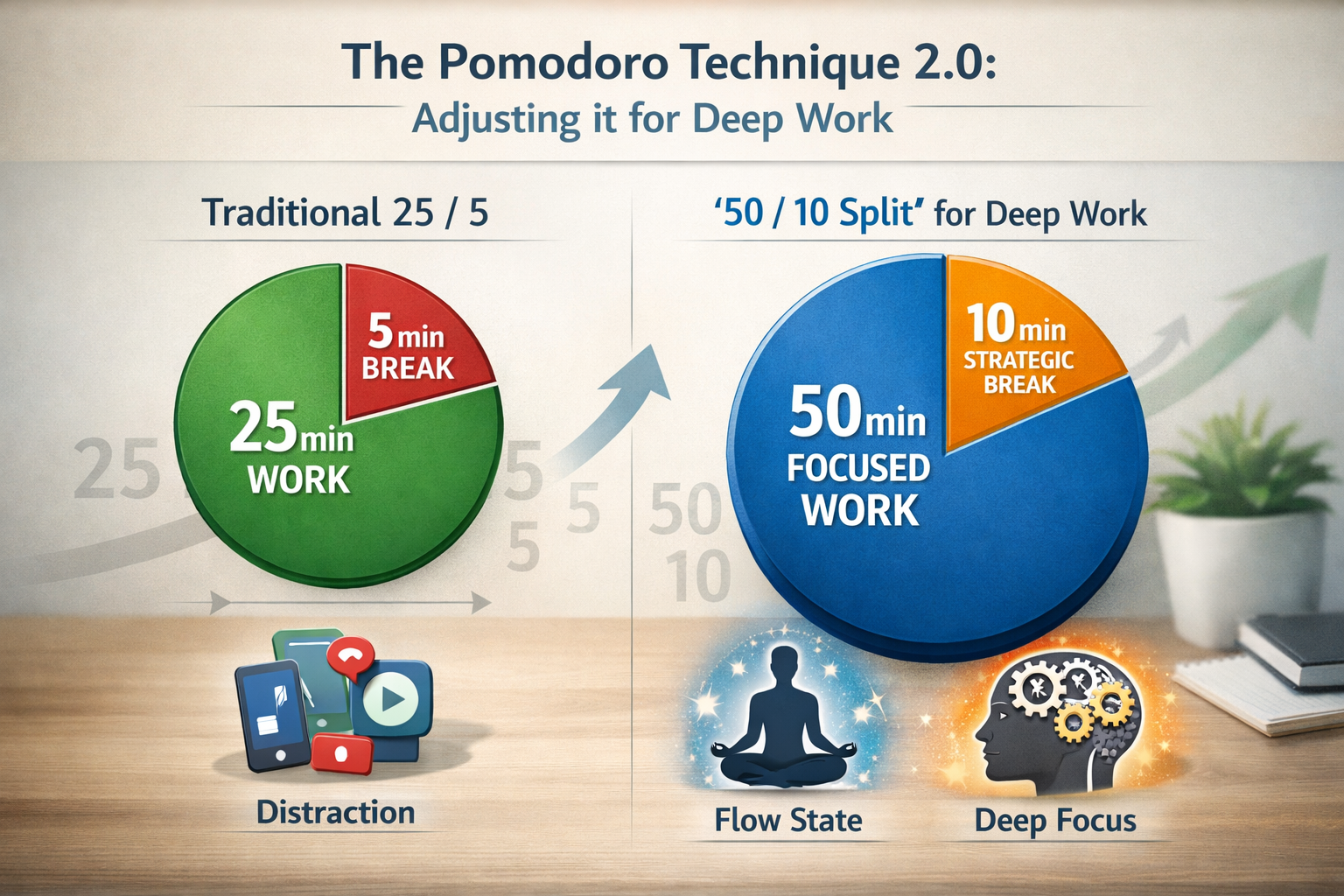
The original Pomodoro Technique, developed by Francesco Cirillo in the late 1980s, proposed 25-minute work intervals separated by 5-minute breaks, with longer breaks after every four "pomodoros." This structure was revolutionary for many, breaking down large tasks into manageable chunks and providing regular intervals to prevent burnout. For simpler, routine tasks, it remains highly effective.
However, the nature of work has evolved. Many professionals in 2026 are engaged in knowledge work, creative endeavors, and complex problem-solving that demand significant cognitive load. These tasks often require reaching a "flow state" – a deeply focused, immersive mental state where one is completely absorbed in the activity at hand. Research suggests it can take anywhere from 15 to 25 minutes just to enter a flow state. A 25-minute Pomodoro, therefore, can prematurely interrupt this crucial period of intense concentration, pulling individuals out of their rhythm just as they are hitting their stride.
Imagine you're coding a complex algorithm, writing a detailed report, or designing an intricate system. Just as your mind fully grasps the nuances and begins to produce high-quality output, the timer buzzes, signaling a break. This disruption can be jarring, costing valuable momentum and requiring additional time and effort to re-establish that deep focus. For tasks demanding significant cognitive energy, The Pomodoro Technique 2.0: Adjusting it for Deep Work recognizes that longer, uninterrupted periods are essential. This approach acknowledges that while regular breaks are vital, the timing and duration need to be recalibrated for optimal deep work outcomes.
The 50/10 Split: Better for Flow States?
One of the most significant adaptations in The Pomodoro Technique 2.0: Adjusting it for Deep Work is the shift from the traditional 25/5 split to a 50/10 model. This means working for 50 minutes, followed by a 10-minute break. This extended work period offers several key advantages for deep work:
- Sufficient Time to Achieve Flow: A 50-minute interval provides ample time to transition into a flow state and sustain it for a meaningful duration. This allows for genuine progress on complex tasks without the looming pressure of an imminent break.
- Reduced Context Switching: Longer work blocks minimize the number of times you have to switch contexts between your focused work and a break. Each switch, even a brief one, incurs a cognitive cost.
- More Restorative Breaks: The extended 10-minute break allows for a more meaningful disengagement from work. This can involve a short walk, light stretching, or a moment of mindful relaxation, preparing your mind more effectively for the next intense work block.
This adjusted rhythm respects the brain's need for both focused engagement and genuine recovery. It acknowledges that deep work is not about continuous grinding, but about strategically maximizing periods of intense concentration. For instance, individuals pursuing demanding academic goals, such as those looking for PhD scholarships in Australia for 2026 or Masters scholarships in Canada for 2026, will find this 50/10 split invaluable for tackling research, writing, and complex problem sets that demand sustained intellectual effort. Similarly, professionals in fields like software development, legal analysis, or creative writing often report greater productivity and higher quality output with longer, undisturbed work periods.
It's important to note that the 50/10 split is a starting point, not a rigid rule. Some individuals might find a 45/15 or even a 60/10 split more effective, depending on their personal energy cycles and the nature of their work. The core principle is to find a balance that allows for deep engagement without leading to burnout.
Experimenting with Longer Intervals
While 50/10 is a great starting point for The Pomodoro Technique 2.0: Adjusting it for Deep Work, further experimentation can yield even better results. Consider these variations:
- The "Hour of Power": A 60-minute work block followed by a 10-15 minute break. This is particularly effective for highly immersive tasks that benefit from extended periods of uninterrupted concentration.
- The "Hyperfocus Sprint": For truly critical tasks, some individuals might opt for a 75-minute work block with a 15-minute break, although this requires significant discipline and is not recommended for sustained use throughout the day to avoid mental fatigue.
- Adaptive Intervals: Instead of fixed times, use a timer as a guide, but allow yourself to complete a natural breakpoint in your work if you are deep in a flow state, then take your break. This is more advanced and requires self-awareness to avoid procrastination.
The key is to listen to your body and mind. If you find yourself consistently losing focus before your 50 minutes are up, perhaps a slightly shorter interval is better. If you feel you're just hitting your stride when the timer rings, consider extending it. The goal is to optimize for your unique productivity rhythm. This adaptability is what truly defines The Pomodoro Technique 2.0: Adjusting it for Deep Work.
Apps vs. Physical Timers (Why I Prefer Physical)
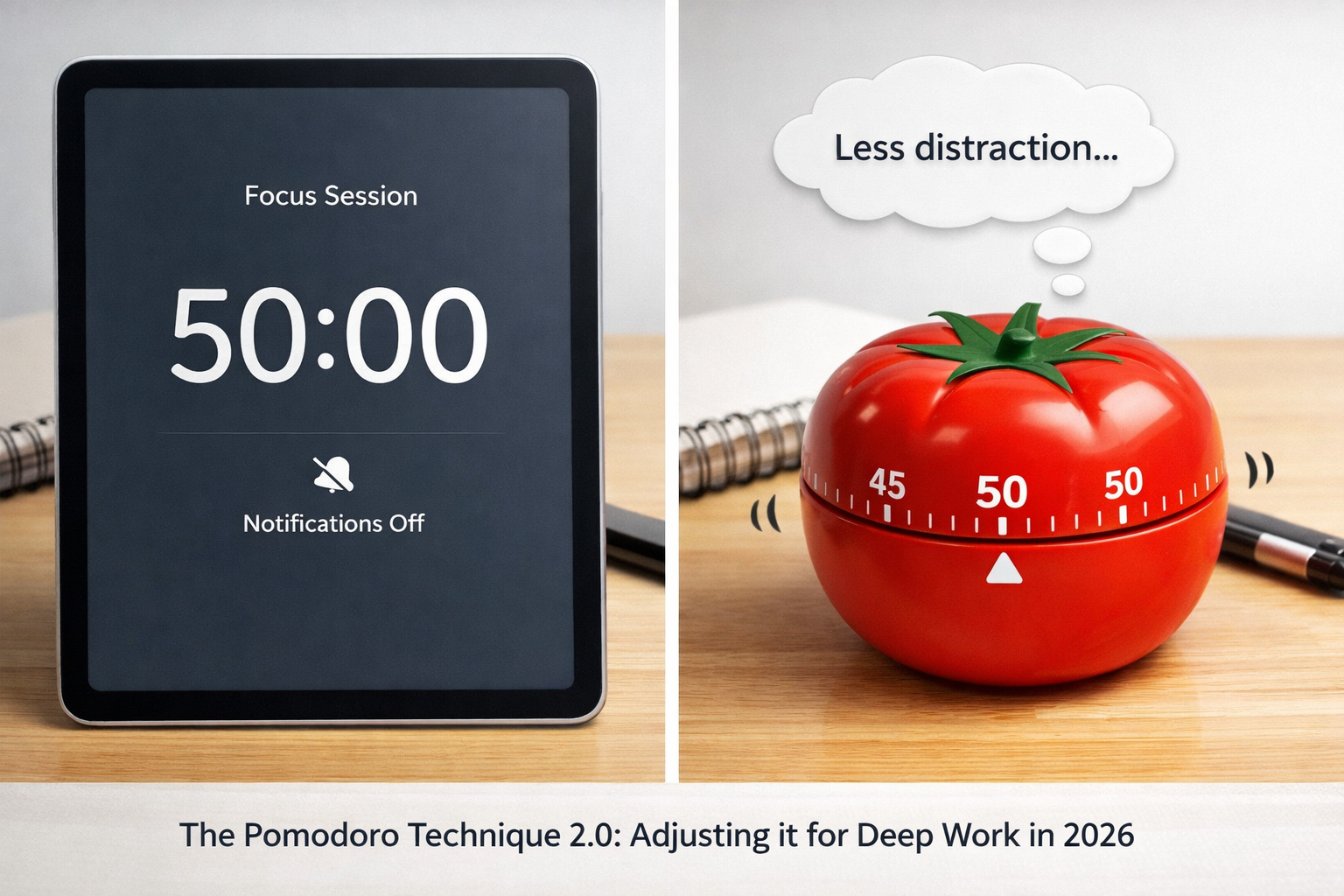
In our digitally saturated world, the temptation to use a smartphone app for tracking Pomodoro intervals is strong. Many apps offer sleek interfaces, customization options, and integration with other productivity tools. However, for deep work, a physical timer often holds a significant advantage.
The Case for Physical Timers:
- Elimination of Digital Distractions: A smartphone, even with "do not disturb" mode activated, remains a powerful source of potential distraction. Notifications can still sneak through, or the mere presence of the device can trigger an urge to check emails, social media, or other apps. A physical timer is a single-purpose tool. It does one thing: count down time.
- Sensory Cue: The gentle ticking of a mechanical timer or the visual representation of time decreasing can serve as a subtle, constant reminder of your commitment to focus. This sensory input reinforces your intention without being disruptive.
- Reduced Decision Fatigue: With a physical timer, there's no choosing an app, setting preferences, or navigating menus. You simply wind it up and begin. This small reduction in decision-making conserves mental energy for your actual work.
- Symbolic Commitment: The act of winding a physical timer can be a powerful ritual, signaling to your brain that a dedicated work period is commencing. It helps to mentally delineate work and break times more clearly.
While digital tools are invaluable for many aspects of modern work, for the precise act of timing deep work intervals, stripping away digital noise can be profoundly beneficial. This is particularly true for roles that require intense concentration, such as those who are pursuing STEM scholarships in the USA for 2026 or engaging in complex research projects. The absence of digital interruptions fosters a more pristine mental environment for problem-solving and creative thought.
When Digital Apps Can Be Useful:
While physical timers are often superior for pure deep work sessions, digital Pomodoro apps do have their place:
- Tracking and Analytics: Many apps offer features to track your Pomodoro history, showing how many sessions you've completed, your most productive times, and consistency. This data can be useful for self-assessment and refinement.
- Accessibility: For those who prefer minimal desk clutter or need a timer on the go, an app is undeniably convenient.
- Customization for Shorter Tasks: If you're mixing deep work with administrative tasks, an app might be more versatile for quickly switching between different interval lengths.
Ultimately, the choice comes down to personal preference and the specific context of your work. However, for truly committed deep work, the minimalist, distraction-free nature of a physical timer aligns perfectly with the ethos of The Pomodoro Technique 2.0: Adjusting it for Deep Work.
What to Actually Do During the 10-Minute Break
The effectiveness of any Pomodoro variation hinges not just on the work intervals, but equally on the quality of your breaks. A common pitfall is to use breaks to check social media, answer emails, or engage in other digitally distracting activities. This effectively negates the restorative purpose of the break, making it harder to re-enter a deep work state.
For The Pomodoro Technique 2.0: Adjusting it for Deep Work, breaks should be intentional and genuinely restorative. The goal is to disengage your mind from the intense cognitive load of your work, allowing it to recharge. Here are highly effective ways to spend your 10-minute break:
-
Move Your Body (Crucial!):
- Stand up and stretch: Simple stretches for your neck, shoulders, back, and wrists can alleviate tension from prolonged sitting.
- Take a short walk: Even a quick stroll around your office or home can increase blood flow, refresh your mind, and provide a change of scenery. This is especially beneficial for those in sedentary roles, like many professional jobs that might involve preparing for Canada Job Seeker Visa in 2026 applications or navigating UK skilled worker visa processes for 2026.
- Do a few jumping jacks or squats: Get your heart rate up briefly to boost energy.
-
Hydrate and Refuel Smartly:
- Drink water: Dehydration can significantly impact cognitive function. Use your break to refill your water bottle.
- Grab a healthy snack: A piece of fruit, a handful of nuts, or yogurt can provide sustained energy without a sugar crash. Avoid sugary drinks or heavy snacks.
-
Mindful Disengagement:
- Look away from screens: Stare out a window, focus on a distant object, or simply close your eyes for a minute. This reduces eye strain and allows your brain to process information in a less focused way.
- Practice deep breathing: Take a few slow, deep breaths to calm your nervous system and bring your focus back to the present moment.
- Listen to a short piece of calming music: Avoid anything with lyrics that might engage your cognitive faculties.
- Journal briefly: Jot down any stray thoughts or ideas that came up during your work session but were not relevant to the task at hand. This "mental offloading" prevents them from lingering and distracting you.
-
Avoid Digital Temptations:
- Do not check email or social media.
- Do not browse news sites or engage in entertainment.
- Resist the urge to answer non-urgent messages.
"The quality of your work is directly linked to the quality of your rest. Treat your breaks as sacred recovery periods, not opportunities for distraction."
By consciously choosing restorative activities during your breaks, you maximize their benefit, ensuring that you return to your deep work session refreshed, re-energized, and ready to re-engage with full mental clarity. This intentional use of downtime is a cornerstone of effective deep work.
Conclusion: Customize the Timer to Your Energy Levels
The Pomodoro Technique 2.0: Adjusting it for Deep Work is not about rigidly adhering to a prescribed timing schedule, but rather about building a flexible framework that supports your peak cognitive performance. While the 50/10 split offers a powerful starting point for deeper focus, the ultimate success lies in your ability to customize the timer to your unique energy levels, the demands of your specific tasks, and your personal work rhythm.
Start by experimenting with the 50/10 model for a few days or weeks. Pay close attention to how you feel at the end of each work block and break. Do you feel genuinely refreshed after 10 minutes, or do you need a bit more? Do you find your focus waning before the 50-minute mark, or are you consistently hitting a stride just as the timer goes off?
Here are actionable next steps for tailoring your Pomodoro Technique 2.0:
- Track Your Energy Curves: Identify when you naturally feel most energized and focused during the day. Schedule your longest deep work intervals during these peak times. For example, if you're a morning person, tackle your most complex tasks in the first few hours.
- Match Intervals to Task Complexity:
- High-complexity tasks: Opt for longer intervals (50-60 minutes) to allow for deep immersion.
- Medium-complexity tasks: The 45/10 or 30/5 split might be more suitable.
- Low-complexity/administrative tasks: The traditional 25/5 can still be highly effective.
- Listen to Your Body's Cues: If you're feeling significant fatigue, don't push through another long interval. Take a slightly longer break, or switch to a less cognitively demanding task. Conversely, if you're in an undeniable flow state, allow yourself to extend the work block slightly until you reach a natural pause, then take your deserved break.
- Incorporate "Micro-Breaks": Even within a 50-minute block, a 30-second eye break every 15-20 minutes can prevent strain and help maintain focus.
- Refine Your Break Activities: Continuously evaluate if your breaks are truly restorative. If you find yourself checking your phone, replace that habit with a quick stretch or a glass of water.
By embracing this adaptive approach, you transform the Pomodoro Technique from a static time management tool into a dynamic system tailored to enhance your deep work capabilities. In 2026, where distractions are abundant and demands are high, mastering this personalized version of the Pomodoro Technique will empower you to consistently produce high-quality work, cultivate sustained focus, and achieve your professional and personal goals with greater efficiency and less burnout. Start experimenting today and unlock your true deep work potential.
SEO Meta Title: Pomodoro Technique 2.0: Deep Work Focus (2026)
SEO Meta Description: Master the Pomodoro Technique 2.0 for deep work in 2026. Learn to adjust intervals like 50/10 for flow, use physical timers, and optimize breaks.